

The FMCG industry is evolving faster than ever. Consumer preferences are changing, competition is increasing, and profit margins are becoming tighter across categories. For FMCG brands, achieving sustainable growth is no longer just about increasing sales volume.
Companies now need smarter ways to maximize profitability, improve pricing strategies, and strengthen customer value. This is where revenue growth management becomes essential.
Many FMCG companies once focused mainly on product distribution and promotional campaigns. While those strategies still matter, modern brands now realize that long-term success depends on making data-driven decisions that improve both revenue and profitability.
Businesses that adopt strong revenue growth management strategies can better understand customer behavior, optimize pricing, and create more effective sales plans.
Why Revenue Growth Management Matters for FMCG Brands
The FMCG market is highly competitive. Consumers today have endless choices, and even small pricing differences can influence buying decisions.
At the same time, brands face several challenges:
- Rising raw material costs
- Intense retail competition
- Changing consumer preferences
- Supply chain disruptions
- Pressure on profit margins
This is why revenue growth management has become a critical growth strategy for FMCG businesses worldwide. Companies that invest in revenue growth management can improve pricing efficiency, reduce wasteful promotions, and identify profitable growth opportunities faster.
Key Revenue Growth Management Strategies for FMCG Brands
1. Smart Pricing Optimization
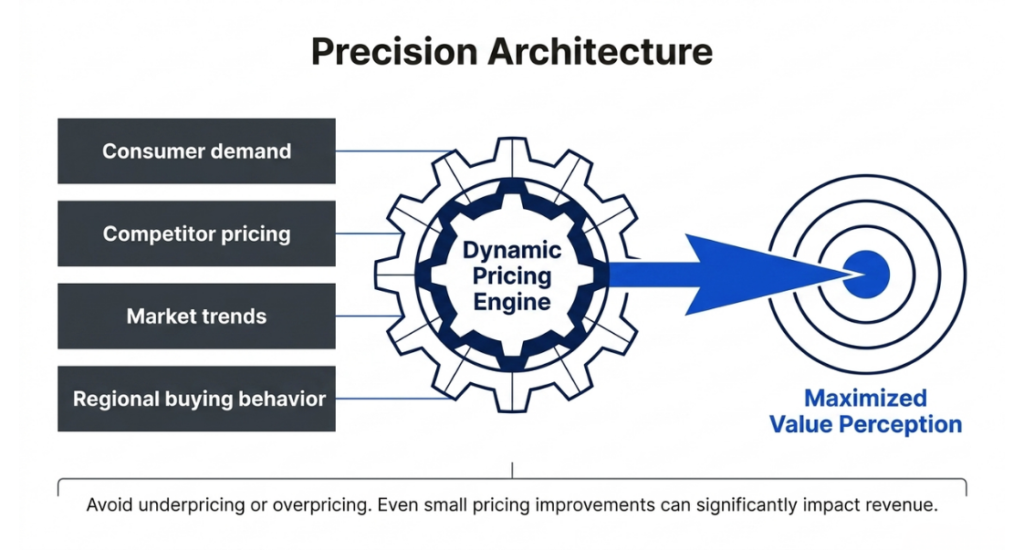
Pricing is one of the most powerful drivers of profitability. Even small pricing improvements can significantly impact revenue.
FMCG brands should regularly analyze:
- Consumer demand
- Competitor pricing
- Market trends
- Regional buying behavior
Effective revenue growth management helps brands avoid underpricing or overpricing products while maximizing value perception. Dynamic pricing strategies also allow businesses to respond quickly to market changes and consumer expectations.
2. Promotion Effectiveness Analysis
Promotions can increase short-term sales, but poorly planned discounts often reduce profitability.
Many FMCG brands run frequent promotions without fully understanding their long-term impact. Revenue growth management helps businesses evaluate which promotional campaigns truly drive profitable growth.
Brands should focus on:
- Measuring promotion ROI
- Understanding customer response
- Avoiding excessive discounting
- Targeting the right customer segments
Smarter promotional planning improves both revenue and brand value.
3. Product Portfolio Optimization
Not every product contributes equally to business growth.
Some products generate strong revenue but low profit margins, while others deliver higher profitability with lower sales volume. Revenue growth management helps FMCG companies identify the most valuable products within their portfolio.
This allows brands to:
- Prioritize high-performing products
- Remove underperforming SKUs
- Improve inventory efficiency
- Increase overall profitability
A well-optimized product portfolio supports sustainable business growth.
4. Customer Segmentation and Insights
Modern consumers have different preferences, spending habits, and purchasing behaviors. Treating all customers the same often leads to ineffective marketing and missed opportunities.
Revenue growth management enables brands to segment customers based on:
- Purchase frequency
- Brand loyalty
- Spending behavior
- Geographic location
- Product preferences
With deeper customer insights, FMCG companies can create more personalized pricing, promotions, and product strategies.
5. Data-Driven Decision Making
Successful FMCG brands rely heavily on analytics and market intelligence. Revenue growth management uses data from multiple sources, including:
- Sales performance
- Retail analytics
- Consumer behavior
- Market trends
- Competitor activity
This data helps businesses make faster and smarter commercial decisions. Companies using advanced analytics can identify revenue opportunities earlier and respond more effectively to market changes.
6. Channel and Distribution Optimization
Different sales channels often perform differently depending on customer behavior and market demand.
For example:
- Modern retail stores
- Traditional trade
- ECommerce platforms
- Direct-to-consumer channels
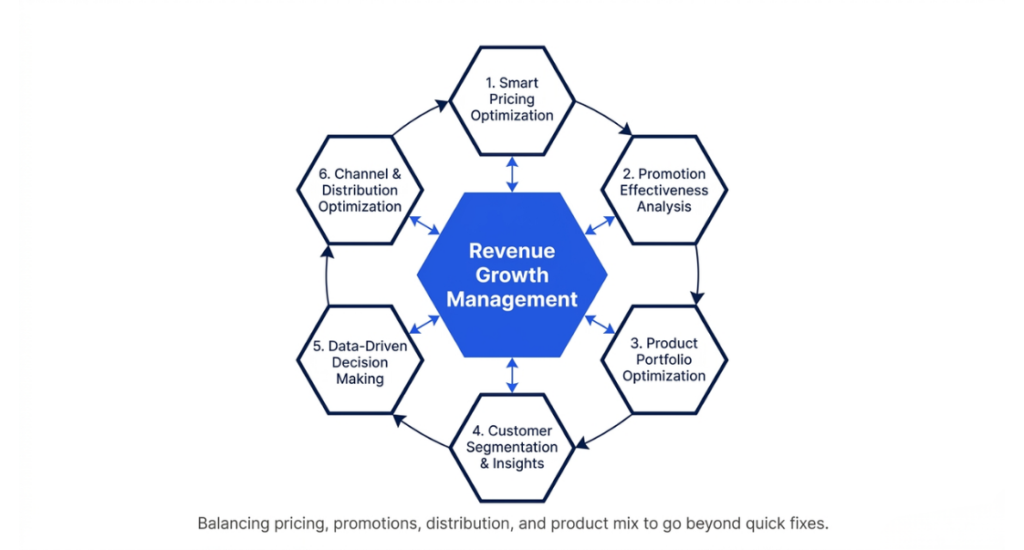
Revenue growth management helps FMCG brands allocate resources more efficiently across channels to maximize profitability and reach. Optimizing distribution strategies also improves product availability and customer satisfaction.
Summary:
Revenue growth management is the heartbeat of successful FMCG brands. By focusing on data, optimizing every aspect of the value chain, and constantly adapting, brands can unlock sustainable growth.
Ready to take your FMCG brand to the next level? Discover how Priorise can help you build a winning revenue growth management strategy. Contact us today and start your journey toward smarter, faster growth.