
Manufacturing companies generate massive amounts of data every day. From supply chain records and production reports to machine performance and inventory tracking, data flows through every stage of operations. But when this data is scattered across spreadsheets, disconnected systems, and manual workflows, businesses face a serious problem called data chaos.
Many manufacturers believe they have enough data to make smart decisions. The reality is often very different. Poorly organized and inconsistent data creates delays, increases costs, and weakens operational efficiency. More importantly, companies struggling with data chaos often fail to build AI ready data environments that support automation and predictive analytics.
As manufacturing becomes more digital, businesses that cannot manage their data effectively risk falling behind competitors.
Modern manufacturing increasingly depends on AI, automation, and predictive analytics. However, AI systems only work effectively when businesses have accurate and structured AI ready data.
AI ready data means information that is:
Manufacturers that fail to create AI ready data environments often face operational bottlenecks, poor forecasting, and weak decision-making.
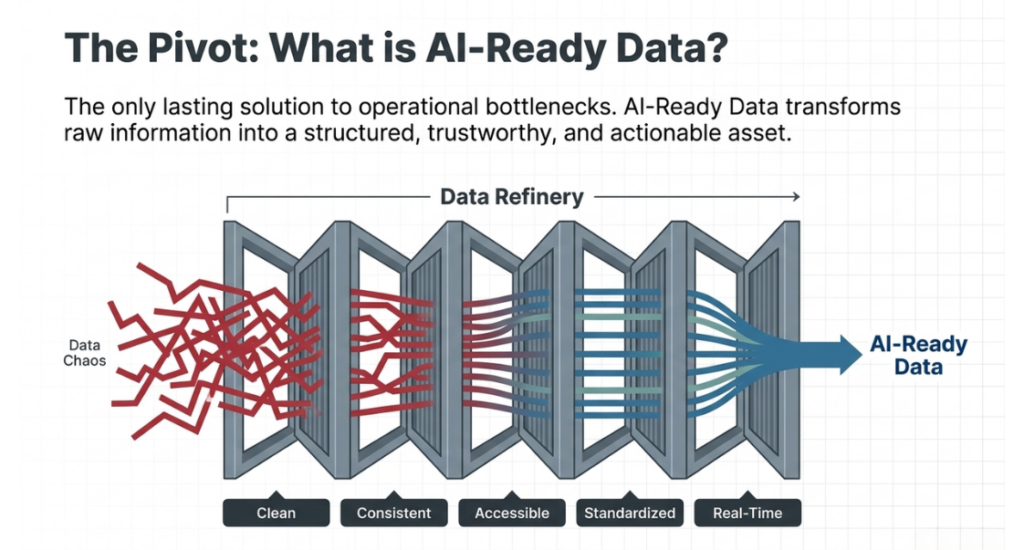
Let us examine five specific problems caused by data chaos and why AI ready data is the only lasting solution.
One of the biggest problems caused by data chaos is production disruption.
When production teams work with outdated or incomplete data, mistakes become more common. Inventory shortages, scheduling conflicts, and machine downtime can slow manufacturing operations significantly.
For example, if inventory records are inaccurate, production teams may discover missing raw materials only after manufacturing has started. This creates delays, increases costs, and impacts delivery timelines. Manufacturers using AI ready data systems can monitor operations in real time and reduce inefficiencies before they escalate.
According to ECI Solutions, manual processes and disconnected systems increase errors and reduce operational visibility in manufacturing environments.
Manufacturing leaders rely heavily on data to make strategic decisions. But data chaos makes accurate analysis extremely difficult.
When reports contain duplicate records, missing values, or inconsistent formats, decision-makers lose confidence in business insights.
Poor data quality can affect:
Without AI ready data, businesses often react too slowly to market changes and operational risks.
Research from IBM Think Insights highlights that poor data quality leads to distorted decision-making, operational inefficiencies, and reduced AI performance.
Many manufacturers still rely on spreadsheets, paper records, and manual data entry. While these methods may seem manageable at small scale, they become expensive over time.
Manual processes increase:
Data chaos also forces employees to spend valuable time fixing errors instead of focusing on productivity and innovation. Building AI ready data systems helps automate workflows, reduce repetitive tasks, and improve operational efficiency.
Modern manufacturing increasingly uses AI and IoT technologies for predictive maintenance. These systems depend entirely on high-quality AI ready data. When machine data is incomplete or inconsistent, predictive maintenance models become unreliable.
As a result:
Data chaos prevents manufacturers from identifying machine performance patterns accurately. With AI ready data, manufacturers can monitor equipment health in real time, predict failures early, and improve operational reliability.
Many manufacturers want to adopt AI-driven technologies, but data chaos becomes a major obstacle. AI systems require structured and trustworthy AI ready data to function properly. If data is fragmented across multiple systems, AI implementation becomes slow, expensive, and less effective.
Businesses struggling with data chaos often face:
Manufacturers that invest in AI ready data infrastructure are better positioned to scale automation, improve analytics, and support future innovation.
According to IBM’s report on poor data quality, data quality issues remain one of the biggest barriers to successful AI adoption and operational efficiency.
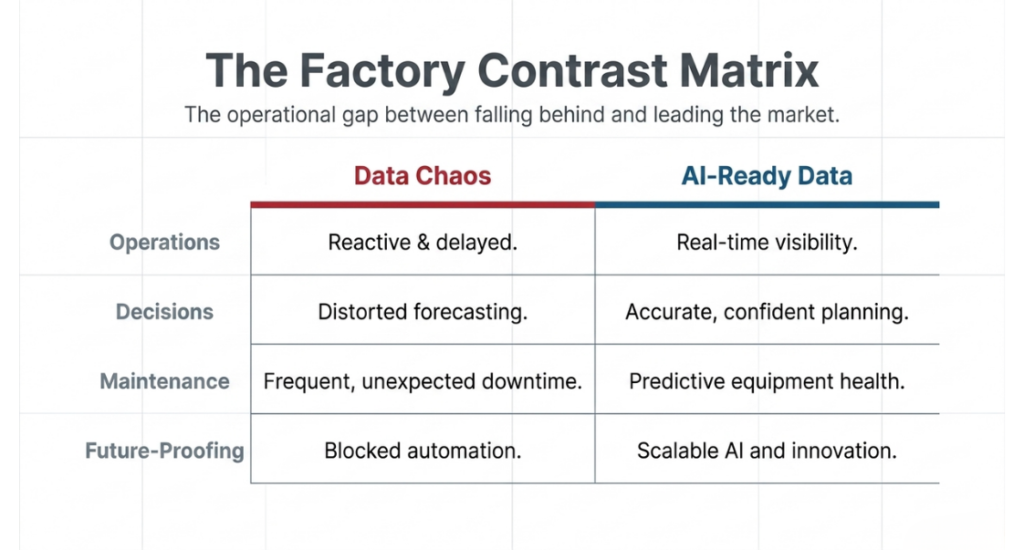
Summary:
The path to a modern, efficient factory is clear. You must identify the areas where data chaos is hurting you the most. Whether it is downtime, bad decisions, or stalled innovation, the root cause is often the same. You need a strategy to organize, clean, and structure your information.
Priorise specializes in helping manufacturers transform messy records into powerful AI ready data. Are you ready to eliminate the chaos? Contact Priorise today to build a smarter, more profitable manufacturing future.