
Every business leader has felt the frustration. Your teams collect mountains of data, yet critical questions remain unanswered. Sales sees one version of customer behavior. Operations sees another. And leadership sees a confusing third.
This disconnect happens because traditional data models centralize everything. They force all domains into a single, rigid structure. The result is slow decisions, missed insights, and constant firefighting.
There is a better way. Federated domain models are changing how organizations achieve data-led success. And companies like Priorise are leading this shift using advanced analytics services and advanced analytics and AI.
Traditionally, businesses relied on centralized data teams to manage everything. While this ensured control, it often led to delays and inefficiencies. As data volumes grew, so did the complexity.
Federated domain models take a different approach. Instead of one central authority, data ownership is distributed across domains such as marketing, finance, and operations. Each domain manages its own data while following shared standards.
This shift enables faster decision-making and better alignment with business goals, especially when leveraging advanced analytics and AI.
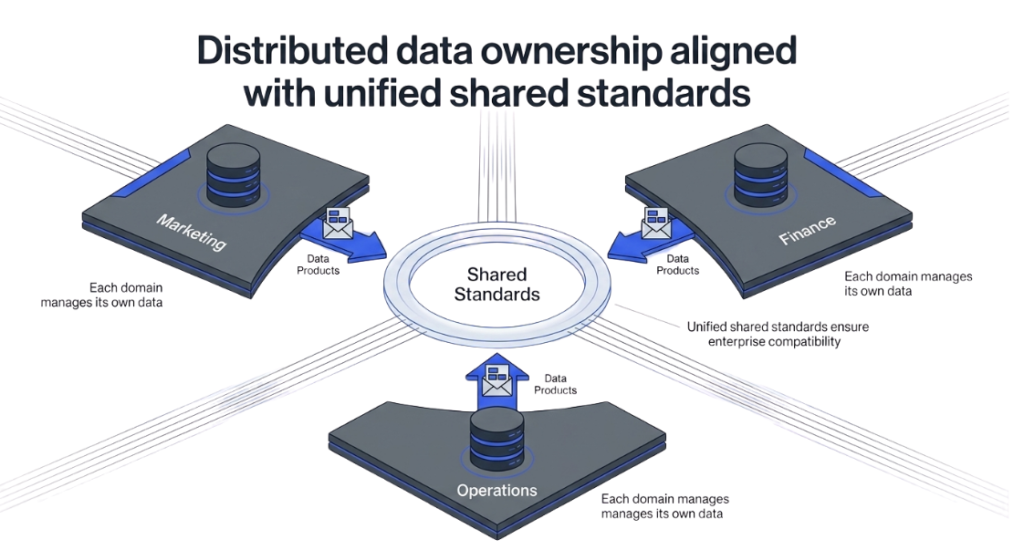
This approach is gaining momentum for a reason. It aligns data strategy directly with business needs.
Key benefits include:
For organizations aiming to compete on intelligence, this model creates a strong foundation. For companies investing in advanced analytics and AI, this model provides the agility needed to stay ahead.
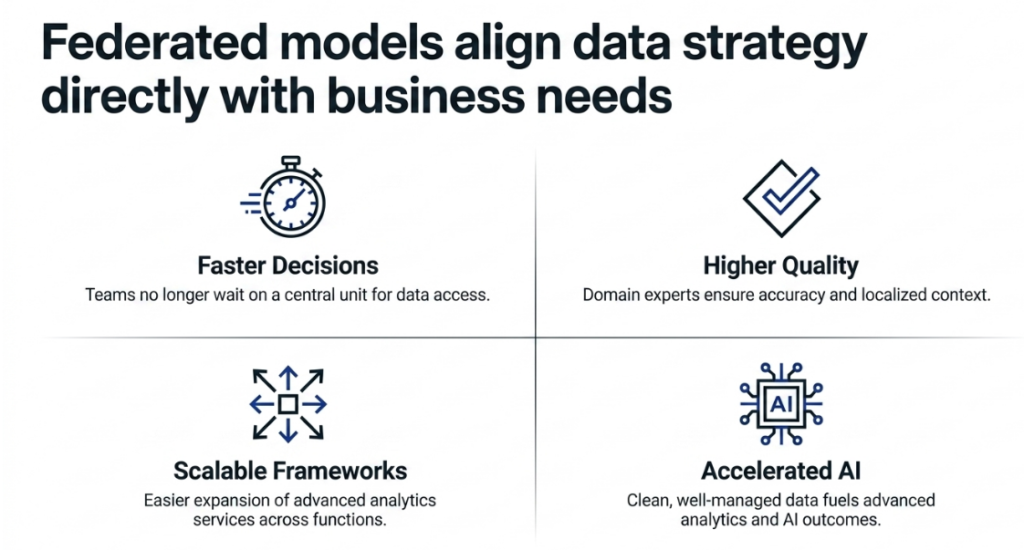
Federated models unlock the true value of advanced analytics and AI by improving data accessibility and ownership.
When combined effectively, businesses can:
Instead of a one-size-fits-all approach, each domain leverages advanced analytics and AI in ways that directly impact its goals.
Transitioning to a federated model requires a structured approach that balances decentralization with control.
Core implementation components include:
At Priorise, these elements are combined to create robust, production-grade data ecosystems tailored for enterprise-scale advanced analytics and AI.
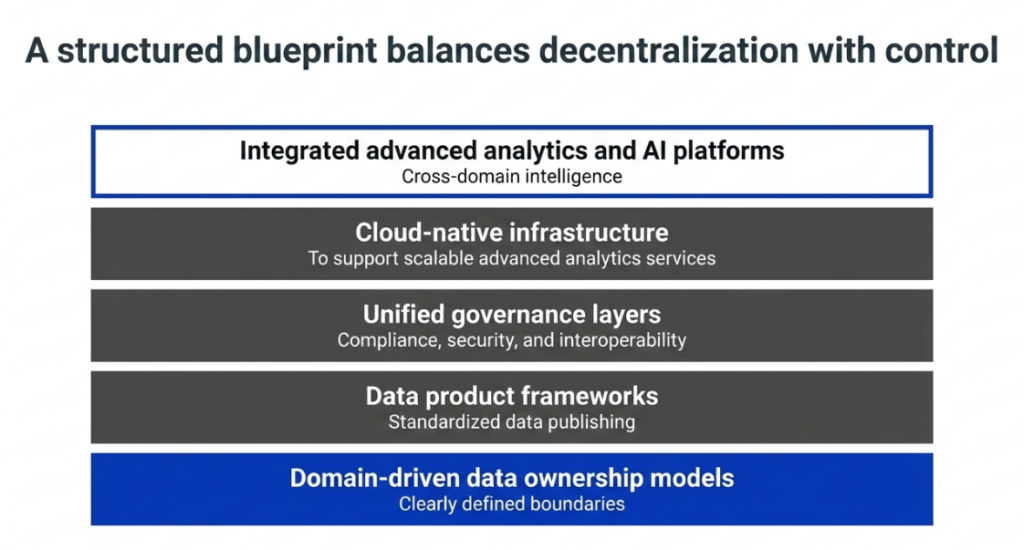
Key outcomes include:
By aligning data architecture with business domains, companies can unlock faster, more relevant insights and drive measurable value.
As enterprises continue to scale, the limitations of centralized data systems will become more pronounced. Federated domain models provide a future-ready architecture that supports:
This approach ensures that data infrastructure evolves in parallel with business complexity.
Federated domain models lead to the charge. As advanced analytics services evolve, so do advanced analytics and AI.
Expect hybrid clouds and edge computing to amplify them. Privacy laws will demand federation.
Priorise stays ahead. Our advanced analytics services ensure you do too.
Ready to redefine your data-led success? Partner with Priorise today for cutting-edge advanced analytics services and advanced analytics and AI. Contact us now to schedule a free consultation and unlock federated power.