
Many organizations invest heavily in artificial intelligence but fail to see real results. The problem is often not the AI tools themselves. It is the data behind them.
Data fragmentation is one of the biggest barriers to success. When data is scattered across systems, teams struggle to create AI ready data and achieve proper data readiness for AI.
Let us explore the top six reasons why fragmented data is holding back your AI initiatives.
When data exists in multiple silos, it becomes difficult to get a complete picture of the business.
Marketing, sales, and operations often use different systems. This leads to inconsistent insights and poor decision-making.
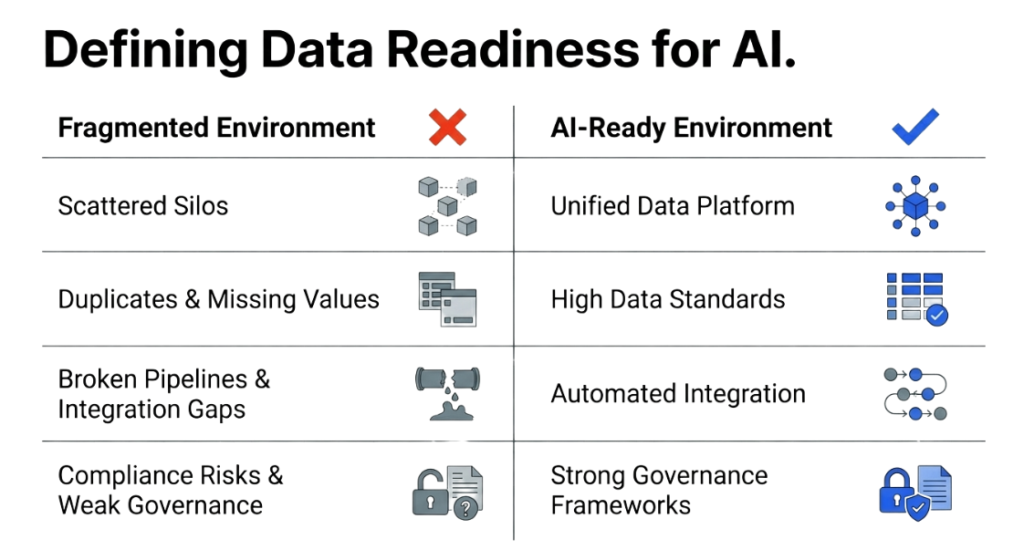
Without a unified data view, creating AI ready data is nearly impossible. A strong foundation of data readiness for AI requires centralized and connected data sources.
Fragmented systems often store duplicate, outdated, or incomplete data. AI models rely on accurate inputs. If the data is flawed, the output will be unreliable.
Common issues include:
These problems directly impact AI ready data and weaken overall data readiness for AI.
In many organizations, data is locked within specific tools or departments. Access is restricted or slow.
This creates delays in analysis and limits collaboration. AI initiatives need seamless access to data. Without it, teams cannot prepare AI ready data or improve data readiness for AI effectively.
Legacy platforms and modern tools often do not communicate well with each other.
This creates integration gaps that prevent smooth data flow.
As a result:
Overcoming these challenges is essential to building AI ready data and ensuring strong data readiness for AI.
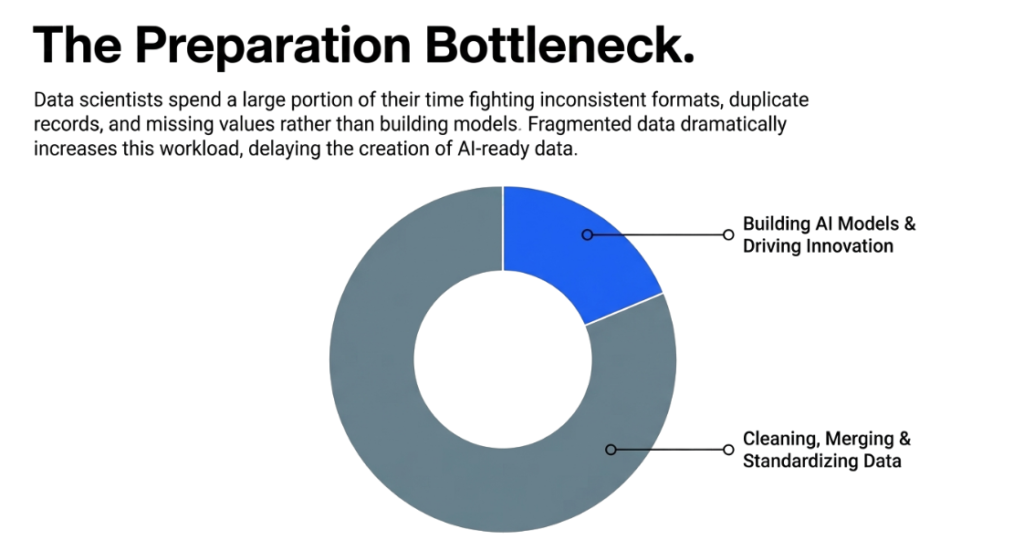
Data scientists spend a large portion of their time cleaning and organizing data instead of building models.
Fragmented data increases this workload significantly.
Teams must:
This slows down innovation and delays the creation of AI ready data, reducing overall data readiness for AI.
Fragmentation often leads to poor data governance. Different systems may follow different rules and standards.
This creates risks such as:
Strong governance is essential for maintaining AI ready data and improving data readiness for AI across the organization.
To unlock the full potential of AI, businesses must address fragmentation head-on.
Key steps include:
These actions help create reliable AI ready data and strengthen data readiness for AI.
Summary
AI success depends on the quality and accessibility of data. Fragmentation creates barriers that limit performance, increase costs, and slow innovation. By addressing these challenges, organizations can build a strong data foundation and fully leverage AI capabilities. Priorise helps businesses eliminate data silos and create scalable solutions for AI ready data. With a focus on improving data readiness for AI, Priorise enables organizations to turn fragmented data into powerful insights.
Take the next step with Priorise and unlock the true value of your AI initiatives today.