
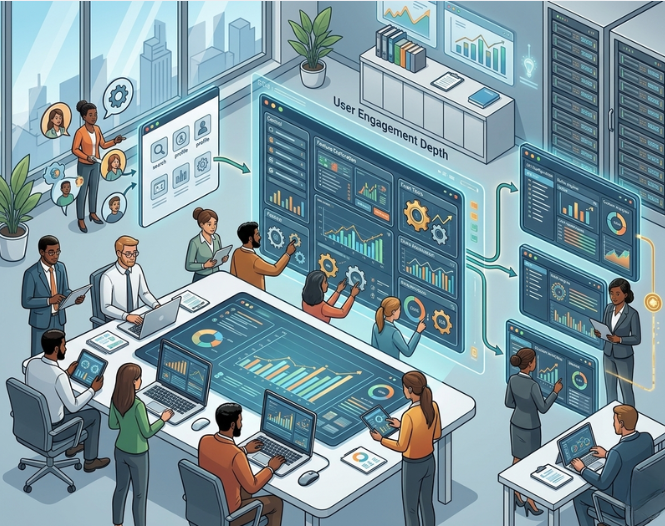
Most organizations collect experience data. Very few can translate it into measurable outcomes.
Clicks, sessions, and surveys generate volume. They do not guarantee insight. The real challenge is identifying which metrics actually reflect user experience and drive business performance. This is where Experience Analytics becomes critical.
Effective and Advanced Experience Analytics is not about tracking everything. It is about tracking what matters. The right metrics reveal friction, predict behavior, and guide optimization. Without them, even the most advanced systems fail to deliver value.
This article defines six essential metrics that form the foundation of high-impact Experience Analytics.
1. User Engagement Depth
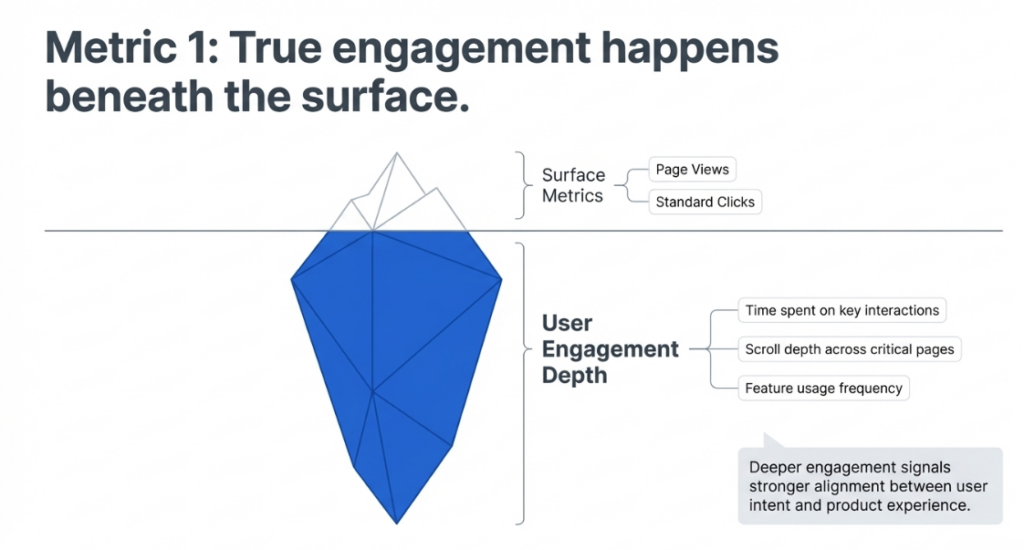
Surface-level metrics like page views do not capture true engagement.
Measure:
- Time spent on key interactions
- Scroll depth across critical pages
- Feature usage frequency
Why it matters:
- Indicates how users interact with core experiences
- Identifies areas of high and low engagement
- Helps prioritize UX improvements
Deeper engagement signals stronger alignment between user intent and product experience.
2. Task Completion Rate
Experience quality is best measured by outcomes.
Track:
- Percentage of users completing key actions
- Funnel progression across steps
- Drop-off points in workflows
Examples:
- Checkout completion in e-commerce
- Form submissions in lead generation
- Ticket resolution in service platforms
Impact:
- Direct correlation with revenue and conversions
- Clear visibility into friction points
- Actionable insights for optimization
This is a primary KPI in any Experience Analytics framework.
3. Time to Task Completion
Speed defines user satisfaction.
Analyze:
- Average time taken to complete tasks
- Variations across user segments
- Delays caused by system or interface issues
Key insights:
- Faster completion improves user satisfaction
- Longer times indicate complexity or inefficiency
- Helps identify process bottlenecks
Advanced Analytics Consulting often focuses on reducing latency in both system performance and user journeys.
4. Error Rate and Friction Signals
Errors are direct indicators of poor experience.
Monitor:
- Form validation failures
- Broken interactions or system errors
- Repeated user actions indicate confusion
Friction signals include:
- Rage clicks
- Rapid navigation back and forth
- Abandoned sessions
Why it matters:
- Highlights usability issues in real time
- Enables proactive fixes
- Improves overall system reliability
These signals provide granular visibility into user frustration.
5. Customer Sentiment Score
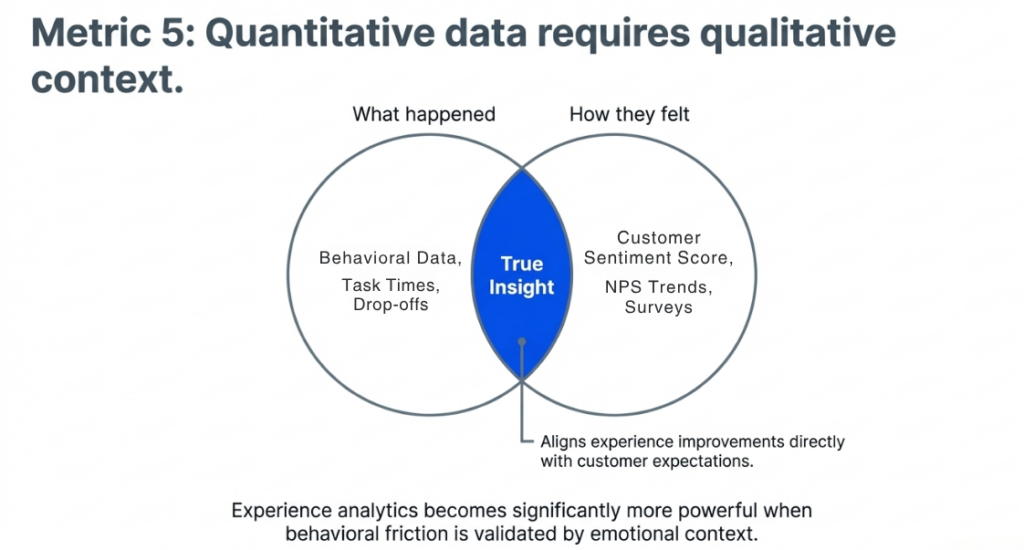
Quantitative data needs a qualitative context.
Capture:
- User feedback from surveys
- Net Promoter Score trends
- Sentiment analysis from reviews and interactions
Benefits:
- Provides emotional context to user behavior
- Validates data-driven insights
- Helps align experience improvements with customer expectations
6. Predictive Experience Score
Modern Experience Analytics is moving toward prediction, not just observation.
Measure:
- Likelihood of user churn based on behavior patterns
- Probability of conversion using historical data
- Engagement trends using machine learning models
Enabled by:
- Advanced Analytics Consulting frameworks
- Predictive modeling and real-time scoring systems
- Integration of behavioral and transactional datasets
Business impact:
- Proactive issue resolution before user drop-off
- Improved personalization strategies
- Higher retention and conversion rates
This metric combines Experience Analytics with Advanced Analytics Consulting to move from reactive insights to proactive decision-making.
Summary:
Effective Experience Analytics depends on selecting metrics that directly map user behavior and business outcomes. Metrics such as task completion rate, engagement depth, and error frequency consistently correlate with higher conversion rates and improved retention. Organizations that operationalize these insights through Advanced Analytics Consulting can reduce friction, optimize journeys, and drive measurable performance improvements. Priorise enables this shift with data-driven frameworks that turn experience signals into actionable results.
If you want to move beyond data collection and start optimizing real user experiences, connect with Priorise and turn metrics into a measurable impact.