


Artificial intelligence is only as powerful as the data that drives it. Every model output, automated decision, and generated insight is shaped by the accuracy, consistency, and accessibility of underlying information.
As adoption of Generative AI Services accelerates and organizations collaborate with Agentic AI Consulting Companies to deploy autonomous systems, a clear truth emerges. AI performance is not defined by algorithms alone. It is defined by data maturity. When data is fragmented or poorly governed, AI initiatives stall. When data is unified, trusted, and strategically managed, AI becomes scalable, reliable, and transformative. Strong data foundations are not optional. They are the prerequisite for sustainable AI success.
Here, we explore how data fuels AI systems and outline the practical steps organizations must take to build resilient, future-ready data infrastructures.
Why Data Is the Core Fuel of AI
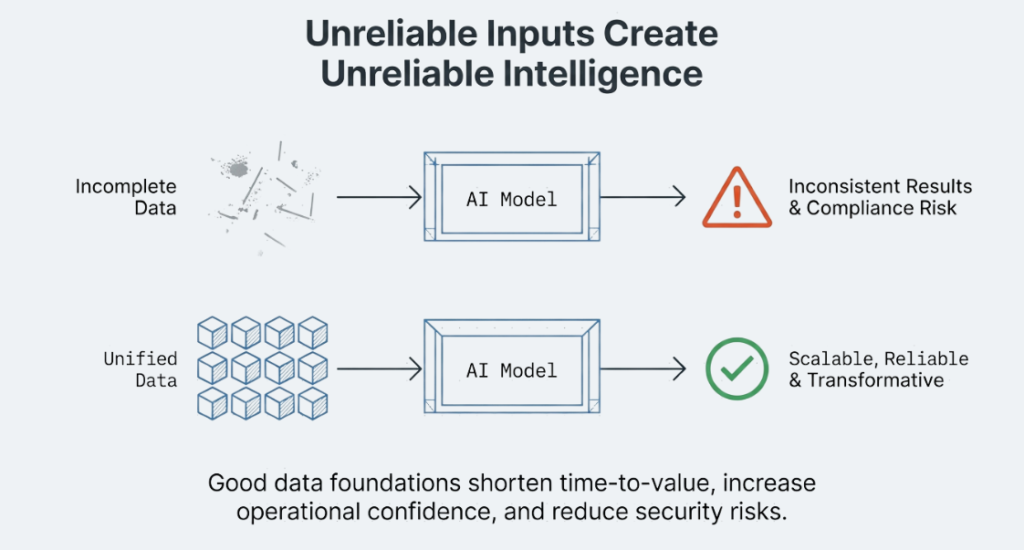
Data challenges are one of the leading barriers to scaling AI. Organizations often struggle with fragmented data, weak governance, and inaccessible datasets. According to industry research, over two-thirds of companies adopting generative AI report difficulties with governance, integration, and training data availability.
AI systems learn patterns and generate insights based on available data. If that data is incomplete or poorly managed, results will be inconsistent or unreliable. Good data foundations:
- Improve model accuracy and reliability
- Shorten the time to value for AI projects
- Increase operational confidence in automation
- Reduce compliance and security risk
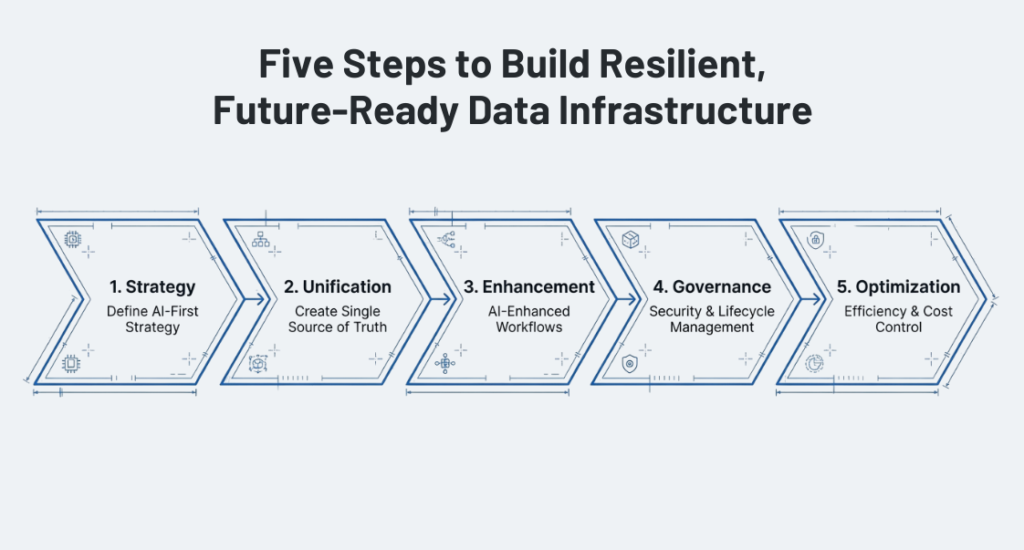
Step 1: Define an AI-First Data Strategy
Start by aligning your data strategy with your broader AI vision. Organizations must treat data as a strategic asset tied directly to business outcomes such as revenue growth, cost optimization, or customer experience improvements.
Key actions include:
- Clarify business goals and how AI supports them
- Align stakeholders from business and IT around data priorities
- Document use cases that require both structured and unstructured data
- Establish KPIs for data quality and access
An AI-first strategy goes beyond technology. It also embeds a mindset that data should be accessible, discoverable, and reusable across the enterprise.
Step 2: Create a Single Source of Truth
AI thrives on unified, comprehensive data. Too many organizations still store data in silos where it is disconnected and inconsistent. Building a single source of truth means centralizing or federating data, so AI models can reliably access all relevant inputs.
Best practices include:
- Consolidate metadata in unified catalogs
- Enable federated access when physical consolidation is not feasible
- Standardize formats for unstructured data, like text and images
- Build integrations across systems to remove data gaps
When data is connected and discoverable, Generative AI Services can provide richer responses and deeper insights.
Step 3: Use AI to Enhance Data Workflows
An emerging approach is to use AI tools to accelerate data management. With the rise of agentic workflows, artificial intelligence can assist in tasks such as data transformation, query generation, and even anomaly detection.
This can include:
- Embedding natural language querying into data catalogs
- Automating data profiling and cleansing
- Recommending optimizations for data pipelines
By letting models assist with data preparation, teams can reduce manual effort and improve quality more quickly.
Step 4: Govern and Secure Data Across the AI Lifecycle
As data volume and complexity grow, governance and security cannot be afterthought. A durable governance framework ensures that data remains compliant, secure, and reliable throughout its lifecycle.
Focus areas include:
- End-to-end data lineage tracking
- Data classification and access controls
- Continuous monitoring and observability
- Policies that align with regulatory requirements
Strong governance underpins trust in AI outputs and mitigates legal and operational risk.
Step 5: Optimize Efficiency and Control Costs
AI workloads can strain infrastructure and drive-up costs if not managed carefully. Organizations must balance scalability with cost efficiency to ensure sustainable performance as data volumes and processing demands grow.
Practical measures include:
- Automating routine workloads with managed services
- Optimizing storage and compute resource usage
- Streamlining ingestion and extraction processes
- Applying cloud financial operations (FinOps) principles
Cost control ensures that scaling data foundations remain sustainable as AI adoption grows.
Business Implications of a Strong Foundation
The transition from traditional data management to an AI-first approach has profound implications for the bottom line. Organizations that invest in their data foundations early experience significantly higher success rates in their AI deployments.
- Reduced Operational Costs: Automation of data cleansing and validation through agentic systems reduces the need for manual oversight.
- Faster Time-to-Market: With “AI-ready” data, new features and products can be developed and deployed in weeks rather than months.
- Enhanced Competitive Advantage: Reliable data leads to superior predictive analytics, allowing companies to anticipate market shifts before they happen.
Conclusion: Data First, AI Second
Your data is the core fuel for AI success. Without strong data foundations, investing in Generative AI Services or working with Agentic AI Consulting Companies will yield limited results. Data strategy, unified access, enhanced workflows, governance, and cost control are essential to achieving dependable AI outcomes. Organizations that build robust data foundations gain the agility to innovate faster, execute with confidence, and unlock strategic value from AI initiatives.
At Priorise, we help businesses transform their data into a foundation that drives AI transformation. If you are preparing to scale AI across your organization and want to strengthen your data readiness, contact us to learn how your data can power sustainable AI success.