



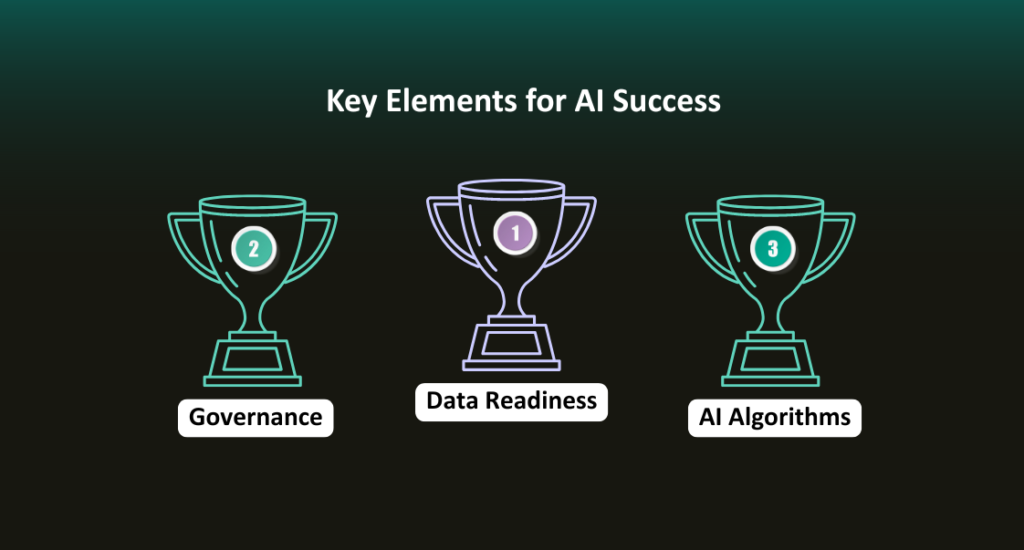
AI-ready data is no longer a future ambition; it is a present-day requirement for organizations that expect AI to deliver measurable business value. AI itself is often treated as a high-performance engine, but even the most advanced engine will fail if it is fueled with contaminated or inconsistent inputs.
Many AI initiatives stall not because the algorithms are inadequate, but because the underlying data foundation is fragmented, inconsistent, or poorly governed. Data readiness is the quality of the fuel, the integrity of the pipeline, and the discipline of maintenance. Without it, AI pilots may demonstrate promise, but they will never scale reliably. With it, AI programs move from impressive demonstrations to durable, enterprise-level impact.
Understanding Data Readiness for AI
Data readiness for AI refers to the process of preparing your organization’s data assets to effectively support artificial intelligence and machine learning initiatives. This encompasses data quality, accessibility, governance, and security measures that ensure your data can reliably train and power AI models.
Priorise has worked with numerous organizations to transform their data landscapes from chaotic to AI-ready. According to our research, companies that systematically address data readiness for AI are 3.5 times more likely to report successful AI implementations compared to those that don’t.
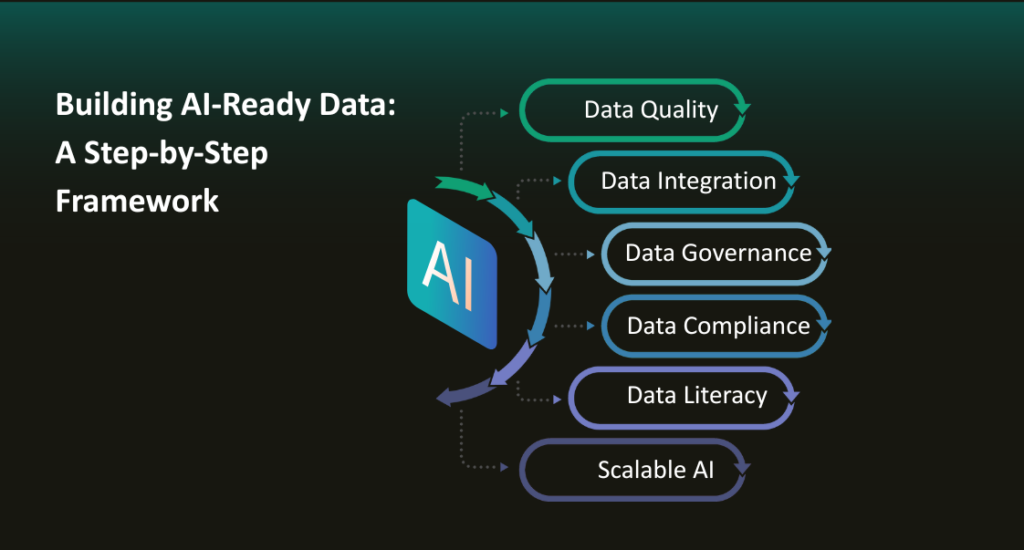
Step 1: Conduct a Comprehensive Data Quality Assessment
The foundation of AI ready data is quality. Organizations must first understand the current state of their data by assessing:
- Completeness across critical attributes
- Consistency in formats and definitions
- Accuracy against trusted benchmarks
- Duplication and redundancy
In financial services, for example, incomplete customer records or inconsistent transaction histories can severely undermine risk models. Addressing these issues early accelerates data readiness for AI and prevents costly rework later.
Step 2: Establish a Robust Data Governance Framework
Effective data readiness for AI requires governance structures that define how data is owned, managed, and protected. This includes:
- Clear data ownership and stewardship
- Standardized quality thresholds
- Metadata and lineage documentation
- Lifecycle management processes
Strong governance does not slow AI down; it enables scale by ensuring that AI ready data remains trustworthy as usage expands.
Step 3: Integrate and Standardize Data Sources
Siloed systems are one of the biggest obstacles to achieving AI-ready data. Organizations must unify data across legacy platforms, cloud environments, and third-party sources. This involves:
- Standardizing schemas and definitions
- Implementing ETL or ELT pipelines
- Enabling consistent data models across domains
Step 4: Address Security and Compliance Requirements
Security is a core component of data readiness for AI, particularly in regulated industries. AI initiatives must be supported by:
- Role-based access controls
- Encryption at rest and in transit
- Regulatory compliance (GDPR, CCPA, etc.)
- Auditable data usage trails
AI ready data must be accessible to data teams while remaining protected against misuse or exposure.
Step 5: Build Data Literacy Across Teams
Technology alone cannot deliver data readiness for AI. Teams must understand how data is collected, transformed, and consumed by AI models. Data literacy programs should focus on:
- Data interpretation and validation
- Model input awareness
- Bias and ethical considerations
When teams understand the data behind AI, adoption increases and outcomes improve.
Step 6: Enable Scalable and Continuous Data Operations
AI systems evolve continuously, requiring pipelines that support monitoring, versioning, and retraining. ai ready data must adapt as business conditions change. Scalable cloud-native architectures and automated data pipelines ensure that data readiness for AI is sustained over time.
Predictive maintenance in manufacturing is a strong example of how streaming sensor data, historical logs, and contextual metadata must flow reliably and at scale for models to remain accurate.
Conclusion: Transform Your Data, Transform Your AI Potential
The journey to AI ready data is not merely a technical challenge; it’s a strategic imperative that determines the success of your AI initiatives. As organizations increasingly compete on AI capabilities, those with superior data readiness for AI will have a distinct advantage in developing more accurate, reliable, and valuable AI solutions.
If your organization is serious about scaling AI, the next step is clear. Partner with Priorise to assess your current data maturity, identify gaps, and build a roadmap toward sustainable, AI-driven value. The sooner your data is ready, the sooner AI can deliver results.
Related Posts

6 Metrics That Define Effective Experience Analytics
Most organizations collect experience data. Very few can translate it into measurable outcomes. Clicks, sessions,…

How Predictive Analytics Improves Sales Forecasting and Strategy
How can predictive analytics solutions transform uncertain sales forecasts into a reliable revenue strategy? Many…

Understanding Data Migration: Types, Use Cases, Costs & Risks
Enterprise transformation does not fail because of strategy. It fails because of incorrect execution at the data layer. As organizations…

Uncovering the True Drivers of Revenue Growth with Customer Loyalty Analytics
A national retailer had invested heavily in one of the most visible retail loyalty programs…