


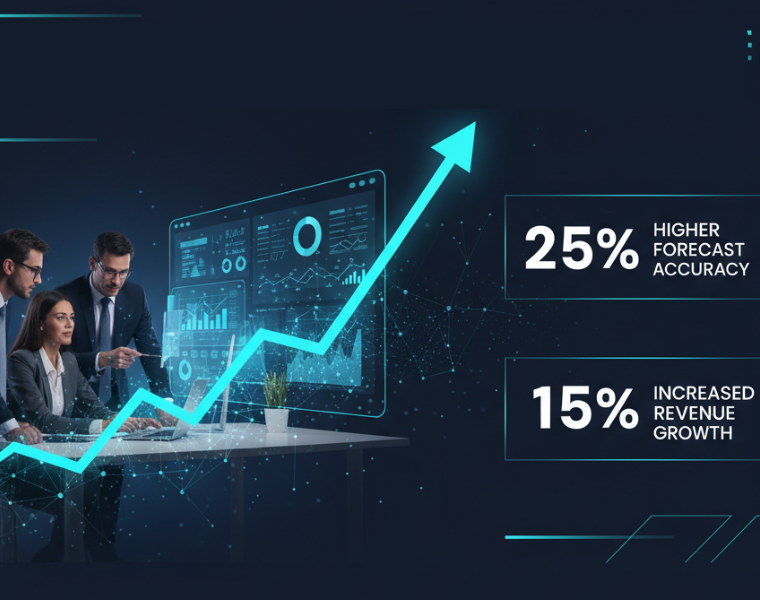
Sales analytics has evolved from simple reporting into a strategic capability that shapes how modern revenue teams operate. Instead of only explaining what happened in the past, organizations now expect data to guide future actions. This shift is where predictive sales analytics become essential, helping sales leaders anticipate outcomes, allocate effort intelligently, and reduce decision-making uncertainty.
To use predictive sales analytics effectively, however, companies must go beyond tools and dashboards. Success depends on data quality, thoughtful modeling, and alignment with real sales workflows.
This guide outlines the right way to implement predictive sales analytics, avoiding common pitfalls for measurable ROI.
Understanding the Foundation of Sales Data
Before advanced predictions are possible, teams must establish a reliable analytical foundation. Sales analytics begins with collecting consistent, structured data from CRM systems, marketing platforms, and customer engagement tools. This includes opportunity stages, deal size, sales cycle length, win-loss outcomes, and activity history.
When these inputs are incomplete or inconsistent, predictions lose credibility. For example, if sales reps update deal stages irregularly or omit close dates, forecasting models will produce misleading results. High-performing organizations standardize data entry and governance early, so analytics outputs reflect reality rather than assumptions.
This disciplined approach ensures that predictive sales analytics operate on trustworthy signals rather than noisy or biased inputs.
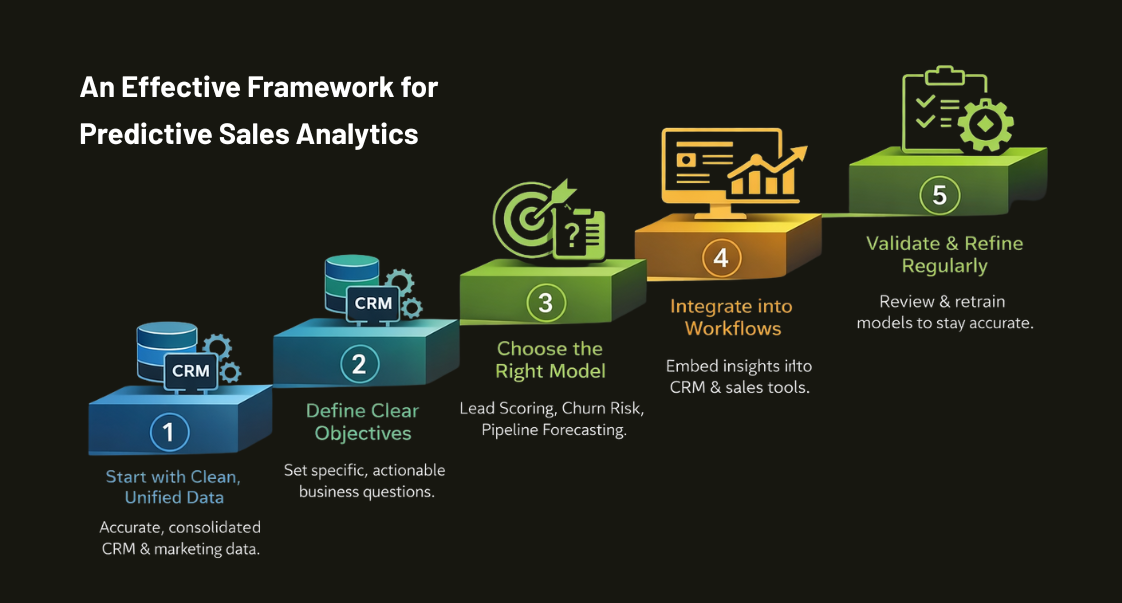
Using predictive sales analytics, the right way requires a structured approach:
-
- Start with Clean, Unified Data: Garbage in, garbage out. Your predictive models are only as good as the data they consume. Ensure your CRM data (deal stages, values, activities) is accurate and integrated with other systems like marketing automation and customer support. Consolidating this data is the first critical step beyond basic sales analytics.
-
- Define Clear, Actionable Objectives: Don’t predict for prediction’s sake. Begin with a specific business question. For example: “Which accounts in our pipeline have a less than 10% chance of closing this quarter?” or “Which existing customers show early signals of risk, and what actions can we take?” Predictive sales analytics should drive specific interventions.
-
- Choose the Right Model for the Job: Different algorithms serve different purposes.
-
- Lead Scoring: Predicts the likelihood of lead converting based on firmographic and behavioral data.
-
- Churn Risk Forecasting: Identifies at-risk customers by analyzing usage dips, supporting ticket trends, and engagement history.
-
- Pipeline Forecasting: Uses historical win rates and cycle lengths to generate a statistically accurate revenue forecast, moving beyond rep intuition.
-
- Integrate Predictions into Daily Workflows: The true value of predictive sales analytics is realized when insights reach the front lines. Integrate predictive scores and alerts directly into your CRM and sales engagement tools. A dashboard might highlight “High-Priority At-Risk Accounts” for customer success managers, turning data into immediate action.
-
- Continuously Validate and Refine: A predictive model decays over time as market conditions change. Regularly review its accuracy. Are the leads it scores as “hot” actually closing? If not, work with data scientists to retrain the model. This closed-loop process ensures your predictive sales analytics system gets smarter.
Avoiding Common Pitfalls in Predictive Adoption
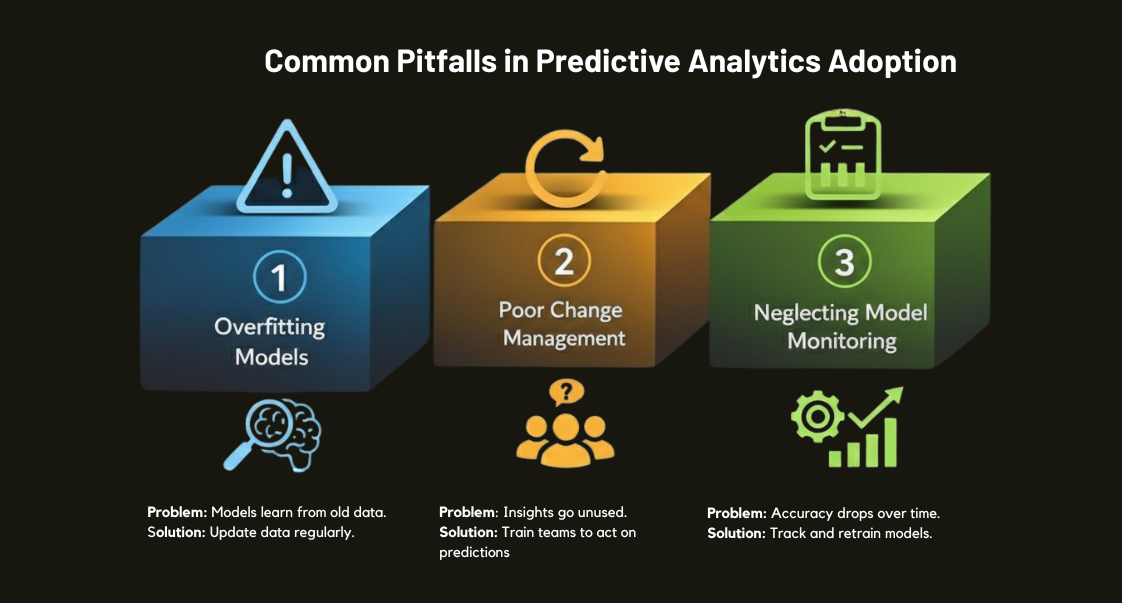
Despite its potential, predictive sales analytics often fail due to misalignment. One common mistake is overfitting models to historical data without considering market changes. Economic shifts, pricing updates, or new competitors can quickly invalidate older patterns.
Another challenge is poor change management. If sales teams do not understand how predictions are generated or how to act on them, insights go unused. Clear communication, training, and feedback loops are critical to ensure sales analytics outputs influence behavior.
Organizations should also regularly monitor model performance and retrain systems as new data becomes available.
Turning Insight into Action with Priorise
At Priorise, we believe the true value of predictive insights lies in helping teams focus on their time where it delivers the greatest impact. If your organization is ready to move from reactive reporting to confident, forward-looking decisions, now is the time to rethink how analytics supports your sales strategy.
-
Previous Post
How is Generative AI Redefining the Retail Value Chain
Related Posts

5 Proven AI Techniques for Accurate Retail Demand Forecasting
For years, retailers depended on historical sales reports and intuition to forecast demand. It worked…

Top 3 Sales Enablement Strategies to Fix a Stalled Sales Pipeline
Your sales pipeline looks full on paper, but revenue tells a different story. Deals sit…

Rethinking Predictive Sales Analytics: What Works and What Doesn’t
Predictive analytics has been part of sales technology conversations for more than a decade. Yet…

Top Features to Look for in Sales Analytics Software
Sales analytics software has become a critical tool for businesses aiming to optimize sales performance,…