

For decades, retail analytics relied heavily on customer segmentation. You know the drill: grouping shoppers into categories like “Value Shoppers” or “Urban Millennials.” But in today’s hyper-competitive environment, this static method falls short. It fails to capture the evolving, dynamic behavior of each customer, leading to generic marketing and weak loyalty. This gap in personalization contributes to stagnant growth and declining retention rates.

To thrive, retailers must shift from anonymous segments to detailed customer digital twin, virtual counterparts that generate synthetic personas evolving in real time. These advanced models not only provide actionable insights but also redefine segmentation into living, breathing clusters that adapt as customer behaviors change.

From Segments to Synthetic Personas

Traditional segmentation relied on broad demographics and transactional groupings, such as “loyal buyers” or “occasional discount seekers.” While useful for basic targeting, this approach misses the complexity of modern customer journeys.

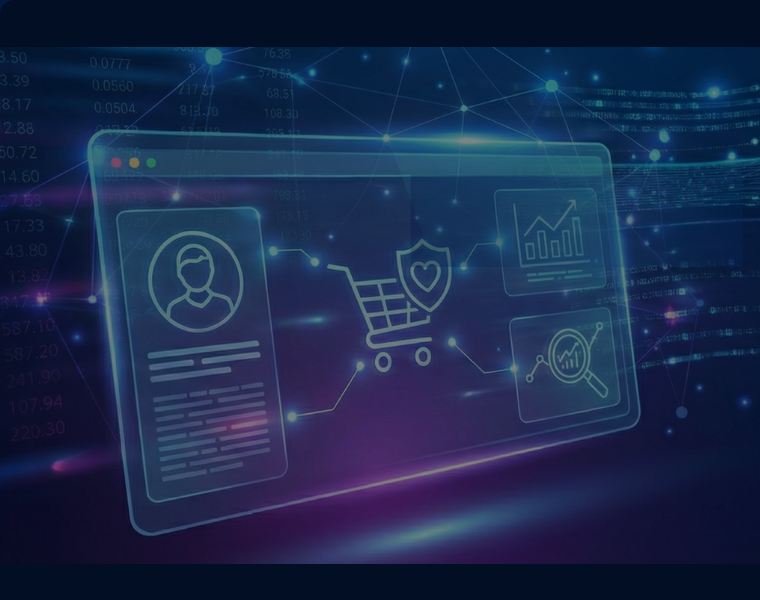
Digital twin offers a new path forward. By creating dynamic, virtual models of individual customers, retailers can simulate behaviors, predict responses, and design personalized strategies.

  • Traditional segmentation: Groups customers into static categories.
  • Digital twin: Represent individuals, synthesizing contextual behavior in real time.
  • Synthetic personas: Dynamic clusters built from digital twin, reflecting evolving preferences.

Here’s where the redefinition happens: instead of treating “Urban Millennials” as one monolithic group, synthetic personas break that segment into micro-clusters like “budget-conscious trend seekers,” “eco-focused repeat buyers,” or “luxury fashion explorers.” Each evolves with actual shopping behavior, creating precision beyond demographics.

The Technical Backbone of Customer Digital Twin

At their core, digital twin is sophisticated data models built using machine learning, simulation, and advanced retail analytics. They aren’t just profiles; they’re computational entities that evolve as the customer evolves.

Key elements include:

  • Behavioral Modeling: Machine learning algorithms track browsing patterns, purchase intervals, and churn signals.
  • Data Fusion: Integrating data from point-of-sale, e-commerce platforms, CRM, and loyalty systems.
  • Contextual Enrichment: External data such as seasonality, social sentiment, or market trends adds predictive depth.
  • Feedback Loops: Continuous learning ensures the twin refines itself with every interaction.

Technically, this means a retailer can simulate “what if” scenarios on a digital twin, like testing how a pricing change or a loyalty perk impacts customer behavior, before rolling it out at scale.

How Synthetic Personas Transform Retail Analytics and Drive Loyalty

By leveraging a synthetic persona for each customer, you can achieve a new level of personalization that directly boosts retention.

1. Hyper-Personalized Marketing and Offers
Instead of “20% off for all loyalty members,” your digital twin enables:

  • Sending a replenishment alert for a specific skincare product just as the customer is likely running out.
  • Offering a complementary item, like a recipe book, to a customer who just purchased a high-end kitchen appliance.

2. Predicting and Preventing Churn
Your customer retention analytics become proactive. The digital twin can identify subtle signals of disengagement—like a decreased browsing frequency or a missed usual purchase cycle and trigger targeted win-back campaigns before the customer is lost for good.

3. Optimizing the Entire Customer Journey
From product discovery to post-purchase support, synthetic personas allow you to test and optimize every touchpoint. You can simulate how a new website layout or a proposed promotion would be received by different customer types, ensuring every change drive engagement and conversion.

Building Customer Digital Twin: A Technical Roadmap

Implementing twin is not plug-and-play; it requires a structured approach:

  • Data Foundation: Build a unified data lake capturing sales, behavior, and external signals.
  • Model Training: Use clustering, predictive modeling, and reinforcement learning to simulate customer behaviors.
  • Simulation Testing: Run experiments on pricing, promotions, and product placements.
  • Integration: Deploy twin insights into CRM, marketing automation, and decision support systems.
  • Continuous Evolution: Update models regularly with fresh data to preserve accuracy.

This roadmap transforms retail analytics from static dashboards into predictive engines that directly influence strategic and operational decisions.

How Priorise Leverages Customer Digital Twin for Retail Analytics

At Priorise, we harness the power of customer digital twin to transform retail analytics and customer retention analytics. Our platform integrates multi-source data to build synthetic personas that evolve with your customers, enabling:

  • Data-driven decision making with actionable insights.
  • Personalized customer journeys that boost engagement.
  • Predictive retention models to reduce churn.
  • Optimized marketing spend through targeted campaigns.

Heads Up:

The shift from static segments to dynamic digital twin is not a future concept, it’s already transforming competitive retail. Retailers that rely solely on traditional segmentation risk falling behind in personalization, engagement, and loyalty. By embracing digital twin and synthetic personas within retail analytics, businesses can create living segments that deliver precision at scale.

The outcome is clear: retain more customers, increase loyalty, and maximize revenue. Retailers who act today with Priorise will lead tomorrow.

Picture of Praveen Kumar

Praveen Kumar

Engagement Manager
15 year of experience in driving successfully project deliveries with data driven insights

Post a comment

Your email address will not be published.

Related Posts