



Key highlights
- A next-best-action model becomes more useful when it distinguishes the probability of a response from the incremental effect of an action. Predicting who will accept an offer is not the same as predicting who will change behaviour because of it.
- Action-level propensity, uplift or incremental-response modelling, expected-value ranking, and well-designed experimentation provide the foundation for effective next-best-action decisioning.
- Incremental lift measurement depends on the right observation window, one that reflects purchase cycles, seasonality, and the expected persistence of the treatment.
Most next-best-action programmes clear their technical review and then stall at the finance review. The models separate responders from non-responders. Acceptance rates climb. Dashboards look healthy. Then someone asks what the programme added over doing nothing, and the answer gets thin.
The gap sits in what the model predicts. Ranking customers by how likely they are to accept an offer is a different task from working out which action changes their behaviour. A predictive next-best-action model does the second one.
Acceptance Probability Is Not Impact
A propensity model trained on past acceptances learns the profile of people who accepted. A share of them would have bought it anyway. Target them again, and the campaign can book revenue that was already on its way. The model scores well on its validation metrics, while the incremental value remains limited.
What matters is the difference between the outcome under treatment and the outcome that would have occurred without the treatment. Because that counterfactual cannot be observed for the same customer at the same time, teams need experimental or carefully designed quasi-experimental comparisons to estimate it.
Teams give that quantity different names, including uplift, incremental response, and treatment effect. The requirement behind all of them is the same; you need cases where the action happened and comparable cases where it did not.
That makes the control group a design decision, not a reporting afterthought. A small, persistent randomised holdout can provide a clean baseline for measuring the programme’s incremental effect. For individual action families, treatment-level randomisation or another appropriate experimental design can help isolate action-specific lift.
Score the Action, Not Just the Customer
Propensity models estimate who is likely to respond. Uplift models ask a different question: who is more likely to respond because of the intervention?
That distinction matters because the highest-propensity customer is not necessarily the best customer to target. Some customers will buy regardless, while others may respond only when the right action is presented. The latter group represents the incremental opportunity.
A mature next-best-action system can therefore combine propensity, incremental-response modelling, expected value and business constraints rather than relying on a single score.
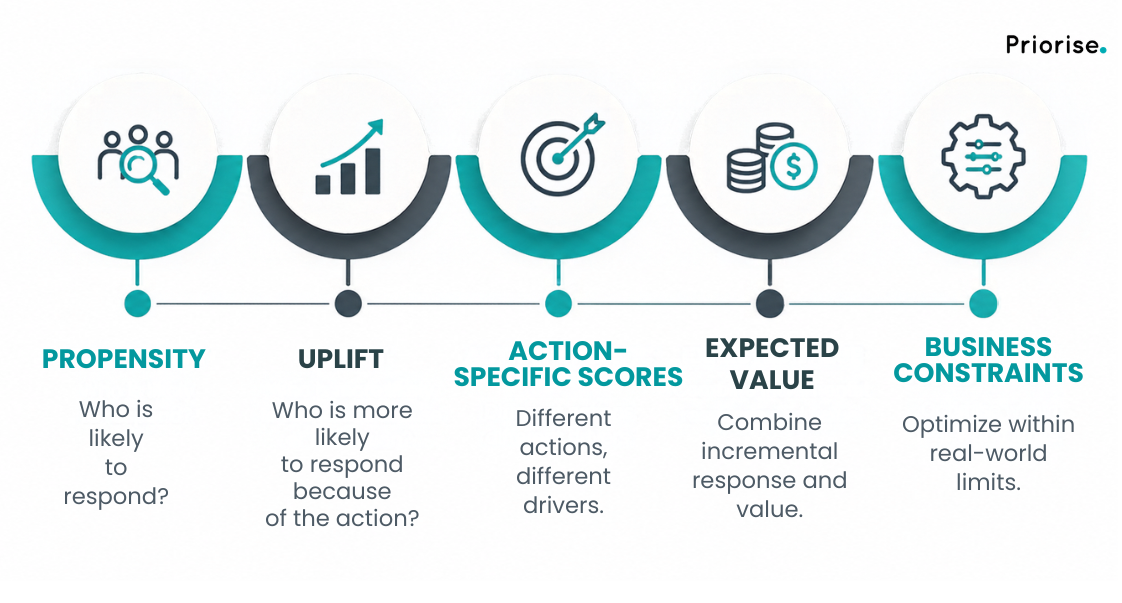
Fig 1 From predicting responses to predicting impact that’s what makes next-best-action truly valuable
One customer-level score reused across different offers can turn several distinct decisions into variations of the same ranking problem. The drivers are not necessarily the same across actions. Upsell response may track usage headroom and plan fit, while service intervention response may depend on repeat contacts, failed payments, or delivery issues. Retention offers may depend more on tenure and contract timing.
Propensity scoring per action costs more to build and maintain, but it gives the decisioning engine something meaningful to compare. McKinsey’s1 account of a European telecom’s next-best-action engine illustrates this approach. Machine learning models estimated the probability that a customer would accept a specific action and the expected value if accepted, then ranked the available actions accordingly.
Rank on Expected Value, Not Probability
Probability tells you who is likely to respond. Incremental value asks whether that response is worth creating.
The decision should account for the expected incremental response, the margin associated with that response, and the cost of delivering the action. That cost can include discount depth, servicing load, and channel cost, as well as purchases; the offer simply pulls forward or shifts away from another channel.
A high-probability discount on a product the customer would have bought at full price can therefore generate little or no incremental value even when the response model is accurate.
| Design choice | Acceptance-focused decision-making | Incrementality-aware NBA |
|---|---|---|
| Core question | Who is likely to respond? | Which action is expected to change behaviour? |
| Scoring unit | Customer | Customer × action |
| Main output | Response probability | Incremental response or treatment effect |
| Ranking input | Response probability | Expected incremental value |
| Control | Optional or reconstructed | Randomised or experimentally designed |
| Role of rules | Eligibility and prioritisation | Eligibility, constraints and optimisation |
CRM Rules vs. Predictive Models
Rules still belong in the stack. They are essential for eligibility, compliance, contract terms, and contact-frequency limits. But they are less useful when they are used to decide which eligible customer should receive which action first.
The distinction is simple: rules decide what is allowed; the model decides what goes first.
When decisioning involves multiple constraints, those constraints should be accounted for in the optimisation or decisioning layer. Offer inventory, channel capacity and contact limits can all affect which action should actually be delivered.
A model that ignores those constraints may predict well for an individual customer but perform poorly when its recommendations are applied across the sequence of decisions the customer receives.
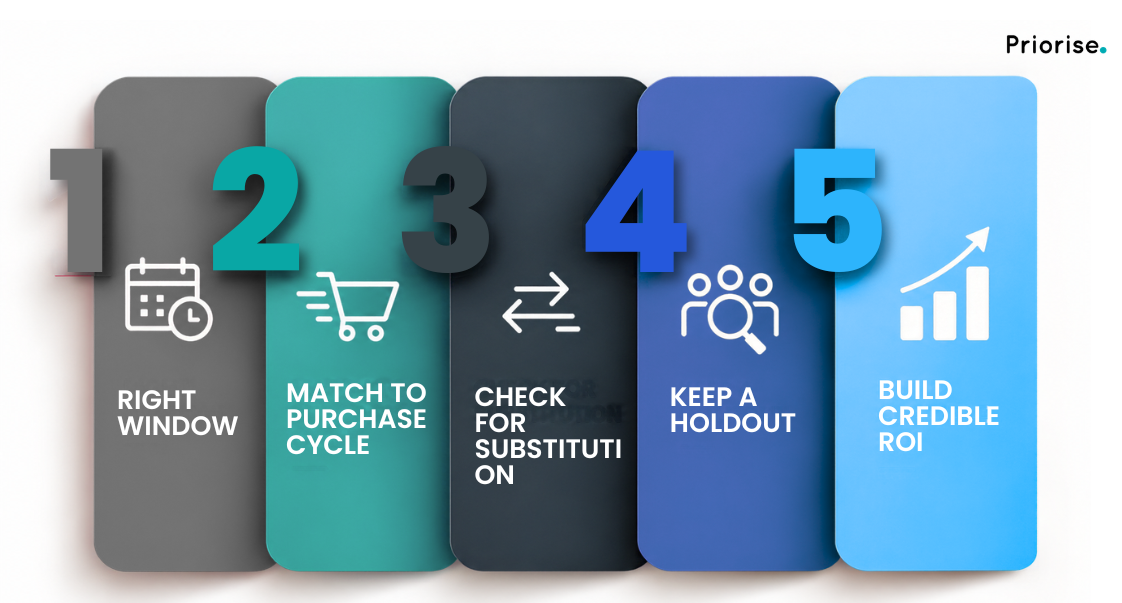
Fig 2 Better measurement starts with the right window, the right controls, and a credible holdout
Incremental Lift Measurement and the Window That Decides It
Measurement is where most of the argument gets settled, and the observation window can materially affect the result.
The window should be long enough to capture the outcome being measured while accounting for purchase frequency, treatment persistence, and relevant seasonality. A high-frequency grocery programme may reveal effects within weeks, while a low-frequency category such as insurance or large appliances may require substantially longer observation. A short observation period in a category with a long purchase cycle can measure timing shifts rather than genuine growth.
Also check for substitution and pull-forward effects. Incremental revenue in the treated group can be overstated if the intervention simply shifts purchases from another category, channel, or future period.
For always-on decisioning, keeping a small share of eligible traffic under randomised assignment can provide an ongoing baseline. Without that holdout, a model can gradually learn from a dataset shaped by its own previous decisions, making it harder to determine whether performance improvements are genuinely incremental.
Measurement design therefore needs to be part of the decisioning architecture, not an afterthought. The holdout may be one of the least visible parts of the build, but it can determine whether the resulting personalisation ROI claim withstands scrutiny.
Wondering whether your next-best-action engine is predicting impact or describing intent?
Know about an incrementality review of your current decisioning stack

FAQs
Strong acceptance rates do not necessarily mean strong incremental revenue. Check whether the stack distinguishes customers who would respond anyway from those whose behaviour is expected to change because of the action.
Not necessarily. Related actions can share a modelling framework when they have similar response mechanisms and available features. Separate models may make sense when actions have materially different drivers, outcomes, or treatment effects.
Propensity modelling estimates how likely a customer is to respond. Uplift modelling estimates how much the customer's outcome is expected to change because of the intervention. Next-best-action decisioning can use both, alongside expected value and business constraints, to select the action to take.
Sources
Eli Stein and Kelsey Robinson, “Unlocking the next frontier of personalized marketing,” McKinsey Quarterly, 30 January 2025. https://www.mckinsey.com/capabilities/growth-marketing-and-sales/our-insights/unlocking-the-next-frontier-of-personalized-marketing

Snehal Kakade
Technology Consulting Partner
Snehal Kakade is a Technology Consulting Partner at Priorise, with 15+ years of experience across data science, data engineering and analytics leadership. Her work centres on data platform strategy, scalable data solutions and applied Gen AI. She has built and led analytics teams that translate complex enterprise data into commercial decisions. She writes on modern data platforms, analytics transformation, applied AI and Gen AI, and the practical challenges of taking data and AI solutions from concept to enterprise scale.
Snehal Kakade is a Technology Consulting Partner at Priorise, with 15+ years of experience across data science, data engineering and analytics leadership. Her work centres on data platform strategy, scalable data solutions and applied Gen AI. She has built and led analytics teams that translate complex enterprise data into commercial decisions. She writes on modern data platforms, analytics transformation, applied AI and Gen AI, and the practical challenges of taking data and AI solutions from concept to enterprise scale.
You might also Like
