Ten years ago, enterprise IT was a battlefield of fragmented legacy systems, manual ETL processes, and data silos that stifled agility. CIOs juggled point-to-point hacks just to sync CRM with ERP, while real-time insights remained a pipe dream. Fast-forward to 2026: enterprise integration has transcended mere connectivity. Intelligent orchestration now powers AI-driven enterprise systems, enabling seamless data orchestration across hybrid IT environments. This shift isn’t tactical; it’s a strategic imperative for digital transformation architecture, turning chaos into competitive velocity.
What Is Enterprise Integration in 2026?
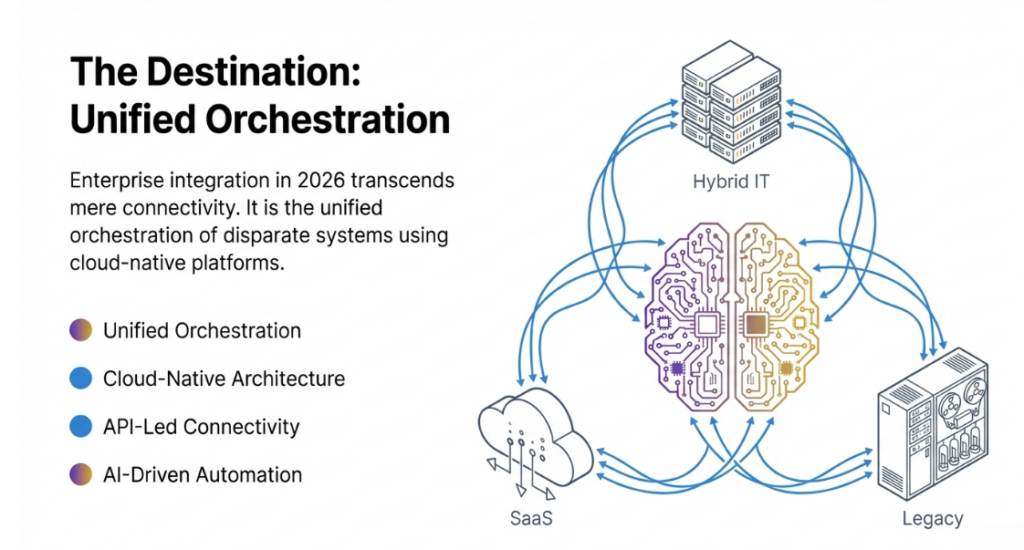
Enterprise integration in 2026 refers to the unified orchestration of disparate systems, applications, and data flows using cloud-native integration platforms. It leverages API-led integration, AI-driven automation, and event-driven architectures to deliver real-time, predictive connectivity—eliminating silos and enabling autonomous, intelligent operations across hybrid environments.
The Evolution: From Basic Connectivity to Intelligent Orchestration
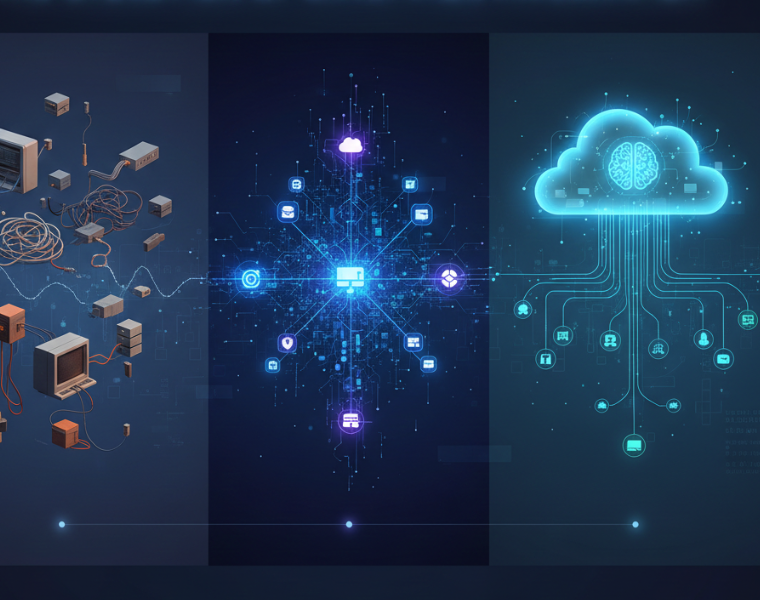
Enterprise Integration has not evolved incrementally; it has undergone structural transformation. Each architectural phase introduced new operating models, governance paradigms, and measurable business outcomes. What began as tactical system connectivity has matured into intelligent orchestration embedded at the core of digital transformation architecture.
Below is a deeper examination of progression.
1. Point-to-Point Integration (Pre-2015)
Architecture Model:
- Direct, hard-coded connections between applications
- Custom scripts, FTP transfers, database links
- Tight coupling between systems
In this era, integration was reactive. When a new application was deployed, IT teams manually created bespoke connectors. As application portfolios grew—ERP, CRM, HRIS, finance systems—the number of integrations increased exponentially.
Business Implications:
- Up to 70% of IT budgets consumed by maintenance and technical debt
- Limited scalability and long change cycles
- High operational risk when modifying core systems
Integration functioned as fragile plumbing, difficult to modify, and expensive to sustain.
2. Enterprise Service Bus (ESB, 2010s)
Architecture Model:
- Centralized middleware hub
- Message transformation and routing logic in a shared bus
- Standardized communication protocols
The Enterprise Service Bus introduced architectural discipline. Rather than dozens of custom connections, systems communicated through a central backbone.
Benefits:
- Reduced redundant integrations
- Improved governance and visibility
- Standardized security and transformation rules
However, centralization introduced new constraints.
Limitations & Business Trade-Offs:
- Monolithic integration logic
- Performance bottlenecks under high loads
- Single points of failure
- Slower change management due to tightly governed middleware
While ESB reduced chaos, it constrained agility: especially as digital initiatives accelerated.
3. API-Led Connectivity (2020s)
Architecture Model:
- Modular, reusable APIs
- Layered design (system APIs, process APIs, experience APIs)
- API management platforms and developer portals
API-led integration represented a strategic shift. APIs were no longer technical connectors; they became digital products.
Strategic Advantages:
- 40% faster integration development
- Reusable assets across multiple business units
- Accelerated partner ecosystem enablement
- Improved developer productivity
This model aligned integration with digital revenue generation. Enterprises began monetizing APIs and exposing services externally, enabling platform business models.
Business Outcome: Integration shifted from cost center to innovation enabler.
4. Cloud-Native Integration (2023+)
Architecture Model:
- Microservices-based integration
- Event-driven architecture
- Serverless functions
- Containerized deployment across hybrid IT environments
As enterprises adopted multi-cloud strategies and SaaS ecosystems, integration architectures had to become elastic.
Cloud-native integration introduced:
- Horizontal scaling under variable workloads
- Decoupled services communicating through events
- Infrastructure-as-code deployment
Operational Gains:
- 50% reduction in deployment cycles
- Improved resilience through distributed architectures
- Elastic scaling to support peak demand
Integration moved closer to real-time responsiveness. Systems reacted to events rather than relying on scheduled batch of jobs. However, complexity increased. Managing distributed services, APIs, events, and governance across hybrid IT environments requires advanced orchestration capabilities.
5. AI-Powered Orchestration (2026 Standard)
Architecture Model:
- AI-driven enterprise systems embedded into integration platforms
- Predictive data routing
- Autonomous workflow coordination
- Self-healing integrations
In 2026, Enterprise Integration transcends connectivity. It becomes intelligent orchestration.
Key capabilities include:
- Predictive Flow Optimization:
AI models anticipate traffic spikes and dynamically reallocate resources.
- Anomaly Detection & Self-Healing:
Integration platforms automatically reroute traffic around failing services.
- Autonomous Process Automation:
Systems coordinate multi-step workflows without manual triggers.
- Policy-Driven Governance:
Compliance and cybersecurity rules are enforced automatically across all integration layers.
Business Outcomes:
- Up to 60% improvement in operational efficiency
- Reduced incident response times
- Increased service reliability
- Real-time decision enablement
Integration becomes proactive rather than reactive. Instead of responding to failures, systems anticipate and adapt.
Key Drivers of Enterprise Integration Transformation
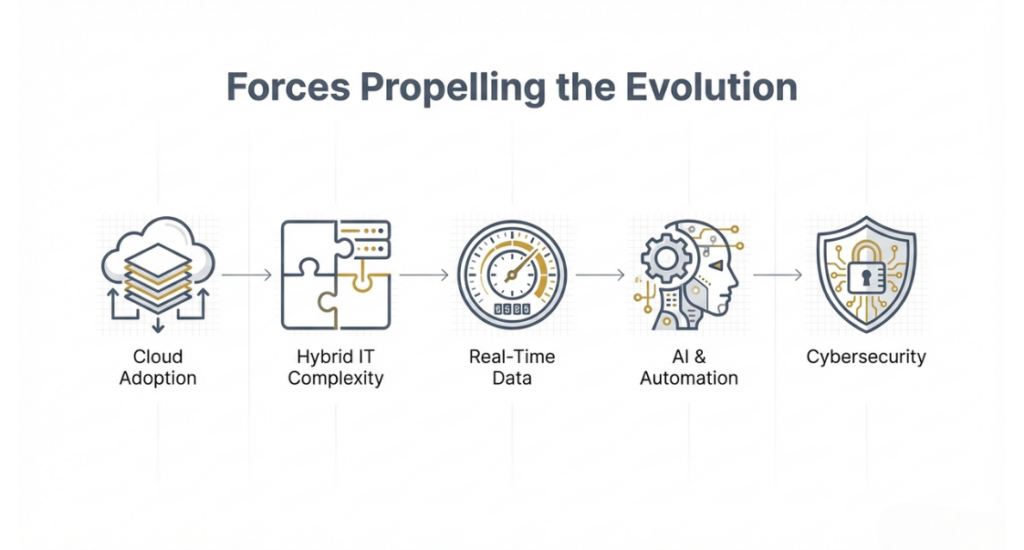
Several forces have propelled this rapid evolution, demanding a more sophisticated approach to integration:
- Cloud Adoption: The shift to multi-cloud and hybrid strategies requires seamless integration between on-premises legacy systems and disparate cloud services.
- Hybrid IT Complexity: Organizations now operate with a mix of SaaS, custom applications, and legacy systems, creating an unprecedented integration challenge.
- Real-Time Data Requirements: Customer experience and operational decision-making now demand instantaneous data flow across the entire enterprise.
- AI and Automation: AI-driven enterprise systems cannot function on siloed data; they require a constant, orchestrated stream of high-quality information from across the business ecosystem.
- Cybersecurity Pressures: A fragmented integration landscape creates security vulnerabilities. Modern platforms embed security protocols, providing consistent governance and compliance across all data flows.
Summary:
The evolution of Enterprise Integration from a tactical necessity to a strategic imperative is complete. In 2026, it is the central nervous system of the modern, intelligent enterprise. Organizations that master data orchestration and intelligent automation will lead their industries, while those clinging to legacy connectivity models will be left behind.
Ready to transform your enterprise integration from a cost center into a strategic engine for growth? Contact Priorise today for a complimentary digital transformation roadmap consultation.