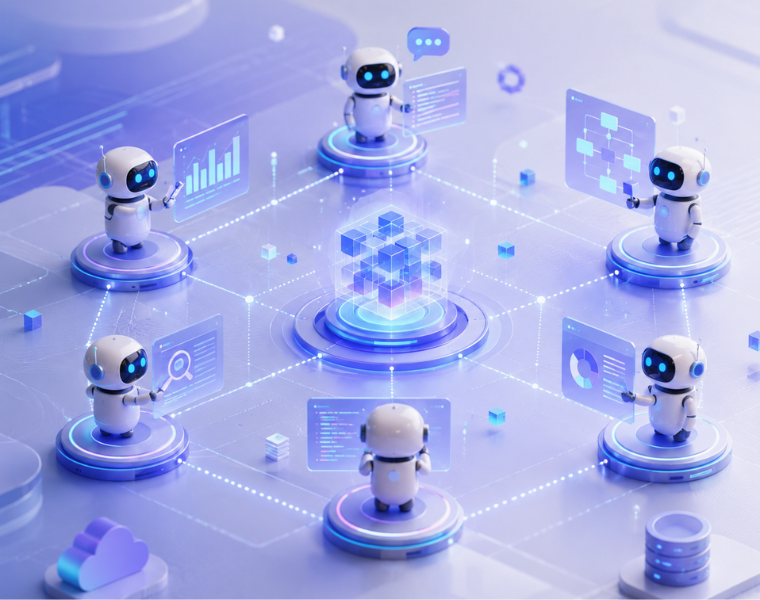


As AI transitions from reactive tools to autonomous problem-solvers, agentic architectures are emerging as a powerful blueprint for building intelligent agents. These systems mimic human-like reasoning by combining three foundational capabilities: memory, planning, and action. Together, these core components allow AI agents to adapt, decide, and execute tasks with minimal human input—paving the way for next-generation enterprise automation.
From intelligent assistants to autonomous workflows, modern agents are increasingly shaped by how well they leverage these three elements. This is where generative AI services and Agentic AI consulting companies play a transformative role—helping businesses design AI systems that are not just smart, but self-directed and context-aware.
1. Memory: The Foundation of Learning and Adaptation
Memory in Agentic AI refers to the system’s ability to store, retrieve, and utilize past experiences to inform future decisions. Unlike stateless models, agentic architectures leverage:
Short-term memory for real-time context retention.
Long-term memory for maintaining learned data across prolonged use.
Episodic memory to recall specific events and outcomes.
By integrating memory, AI agents can personalize interactions, avoid repetitive mistakes, and improve efficiency, key advantages for businesses leveraging generative AI services.
2. Planning: Strategic Decision-Making for Autonomous Agents
Through planning, AI systems evolve from passive responders to strategic thinkers. Expert Agentic AI consulting companies develop architectures that allow agents to:
Simulate future scenarios before taking action.
Optimize decision pathways based on constraints and objectives.
Adapt strategies in response to changing environments.
For instance, an AI-powered supply chain optimizer can forecast disruptions and reroute logistics autonomously. This level of foresight is crucial for enterprises relying on Agentic AI for mission-critical operations.
3. Action: Execution with Precision and Adaptability
The final component “action” determines how an AI agent interacts with its environment.
Effective execution requires:
Real-time responsiveness to dynamic inputs.
Feedback loops for continuous improvement.
Multi-modal interaction (e.g., text, voice, APIs).
In generative AI services, action translates to producing coherent outputs, whether drafting documents, generating code, or automating customer support. The ability to act autonomously while maintaining accuracy is what sets Agentic AI apart from conventional models.
Why Agentic AI Matters for Businesses
The convergence of memory, planning, and action is enabling the creation of AI agents that can learn, adapt, and perform with human-like flexibility. These components are no longer isolated innovations—they’re the structural DNA of the next-generation autonomous systems. Organizations partnering with Agentic AI consulting companies gain access to systems that
 Learn continuously from interactions.
Anticipate challenges through advanced planning.
Execute tasks with minimal human intervention.
As AI adoption grows, architectures incorporating memory, planning, and action will dominate industries ranging from healthcare to finance.
Summary:
Understanding the core components of agentic architectures—memory, planning, and action—is essential for anyone interested in the future of artificial intelligence. By leveraging these elements, organizations can harness the full potential of generative AI services, driving innovation and efficiency in their operations. As the field of AI continues to advance, the role of agentic architectures will undoubtedly become increasingly significant, shaping the way we interact with technology and each other.
By exploring the nuances of these components, businesses can better position themselves to take advantage of the transformative capabilities offered by agentic AI consulting companies, paving the way for a more intelligent and responsive future.
At Priorise, we help organizations build intelligent, agentic systems designed for real-world impact.