


Key highlights
- Many teams inherit their forecasting method from their CRM instead of choosing it deliberately.
- Forecast accuracy depends as much on reliable data and consistent processes as on the method itself.
- More sophisticated methods only help when deal volume and historical data can support them.
Many teams do not revisit their sales forecasting method deliberately. They inherit the approach built into their CRM or established by a previous sales operation, then keep using it long after the sales motion has changed. The CRM may have assigned default probabilities to each stage, and those numbers can continue influencing forecasts for years.
That matters before you look for something more sophisticated. A method may simply never have been tested against your business.
So the question for 2026 is less about which forecasting method looks best on paper and more about which one fits your revenue, sales process, and available data.
What Does a Sales Forecasting Method Actually Do?
Most forecasting methods draw from three inputs:
- what is already in the pipeline
- what has happened historically
- what sales teams know about current deals
The difference is how much weight each method gives them.
Your pipeline shows deals in progress and their current stages. Historical data shows how comparable deals performed before. Rep judgement captures information the system may not record.
A rep roll-up relies heavily on that judgement. In simple terms, it is a forecast built from reps’ estimates of which deals will close and for how much. A historical run rate relies more on past performance. Most methods sit somewhere between the two.
It is also worth considering who uses the forecast. Finance uses it for planning. Hiring depends on expected revenue. Leadership uses it for targets and business decisions. A forecast miss can therefore affect more than the sales team.
The Main Sales Forecasting Methods
| Method | Works when | Breaks when |
|---|---|---|
| Historical run rate | Revenue is stable and seasonality is understood | Growth or the sales motion has changed |
| Rep roll-up | Deal count is low and reps know their accounts well | Optimism or sandbagging goes unmeasured |
| Stage-weighted pipeline | Stage definitions and exit criteria are consistent | Deals remain in favourable stages |
| Probability-weighted forecasting | You have enough historical outcomes to set probabilities | Probabilities are never updated |
| AI sales forecasting | Deal volume and historical data are strong | Data is thin or unreliable |
Stage weighting applies a probability based on where an opportunity sits in the sales process. Historical probability weighting sets those probabilities based on what comparable opportunities actually did in the past.
Four conditions should guide the choice:
- Deal count: A team closing a small number of large deals may have too few comparable outcomes for a complex model to separate useful patterns from unusual deals.
- Deal size spread: If a few unusually large deals can determine the quarterly result, review those deals separately rather than letting them distort the broader forecast.
- Cycle consistency: A model may struggle when a business has both fast transactional deals and long enterprise sales cycles.
- Data quality: Stage definitions, close dates, opportunity values, and other key fields need to be reliable enough to support planning decisions.
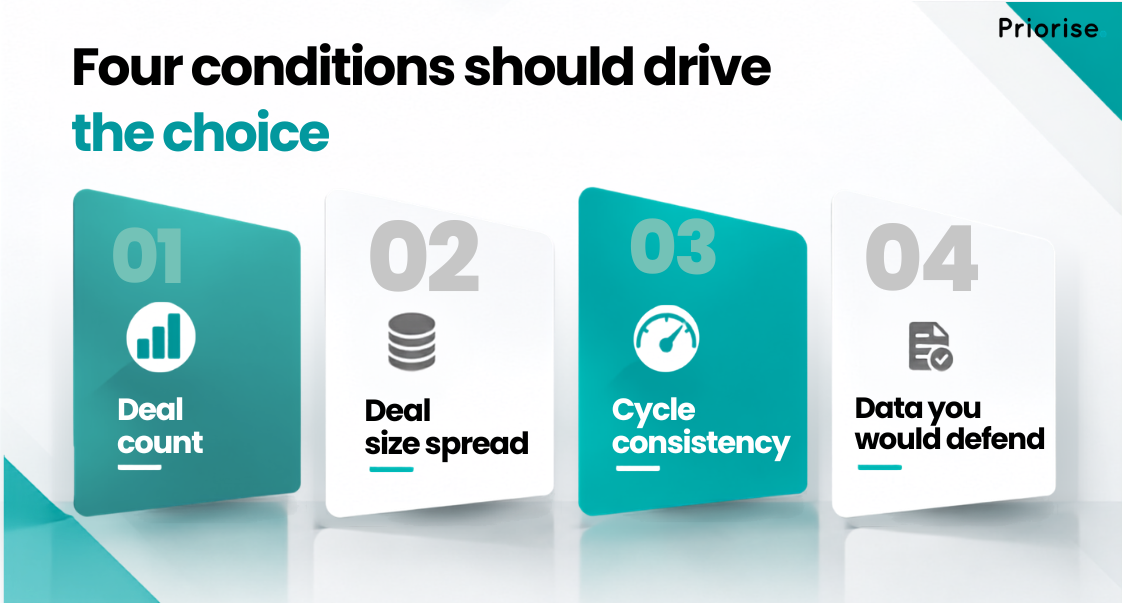
Fig 1 Map your deal volume, process consistency, and data maturity to pinpoint the exact sales forecasting method your business actually needs
Pipeline-based forecasting can work well when teams regularly compare stage probabilities with actual closed-won results and update them when patterns change. Problems often arise when teams simply inherit CRM defaults and never revisit them.
Sales Forecast Bias Drives Misses
A forecast can be noisy, swinging high one quarter and low the next. Or it can be biased, missing in the same direction repeatedly.
Persistent bias can be especially damaging because it distorts planning. Reps may bring optimism into pipeline reviews. Managers may make consistent judgement adjustments. Stage probabilities may also reflect an older sales motion.
The data itself can make the problem worse. Validity’s1 2025 research surveyed 602 CRM users and administrators across the US, UK and Australia. It found that 76% said less than half of their organisation’s CRM data is accurate and complete.
A forecasting model cannot reliably correct information that is consistently entered incorrectly. If close dates, stages, or opportunity values are systematically optimistic, the model can reproduce that bias rather than eliminate it.
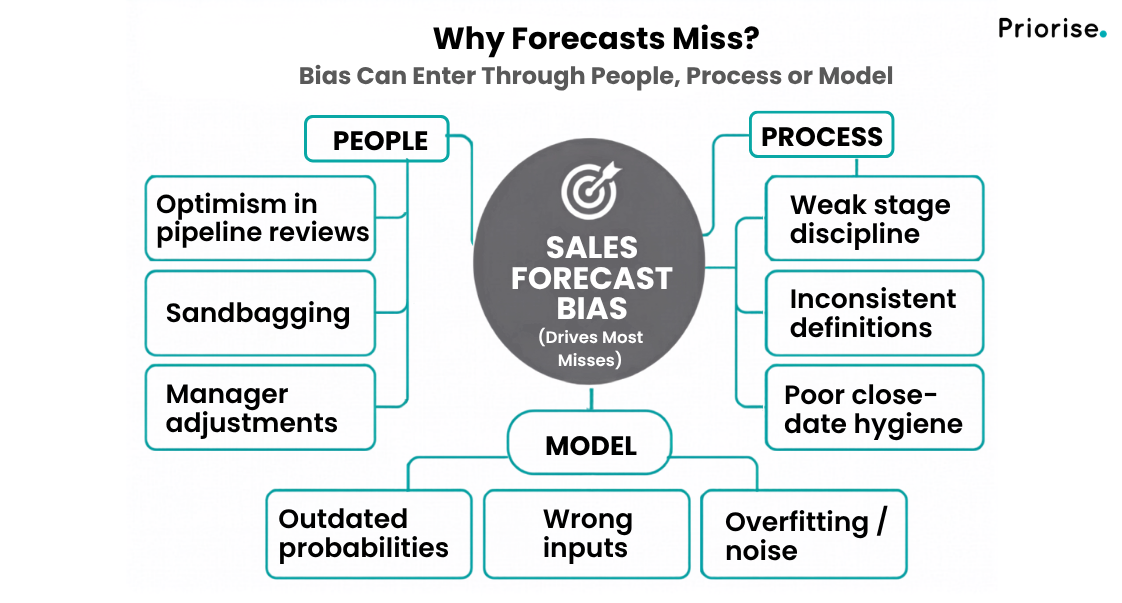
Fig 2 Trace how your people, processes, and models drive sales forecast bias so you can fix the root causes of missed targets
Does AI Sales Forecasting Really Do Better?
Sometimes, but the deciding factor is usually the quality and amount of historical data.
AI sales forecasting can learn from past opportunity outcomes and signals such as deal age, stage movement, activity, engagement, account characteristics, and close-date behaviour. Its main advantage is that it can identify patterns across many signals at once.
But AI still needs enough reliable examples to learn from. If there are too few comparable outcomes, the model may struggle to distinguish genuine patterns from unusual deals.
There is no universal deal-count threshold. The more useful question is whether you have enough reliable historical outcomes for the model to learn patterns that are likely to hold in the future.
Proving that the technology improved forecasting is another challenge. Gartner2 surveyed 227 chief sales officers in August and September 2025, and 31% named difficulty proving the ROI of AI-driven tools as a top challenge to their 2026 sales objectives.
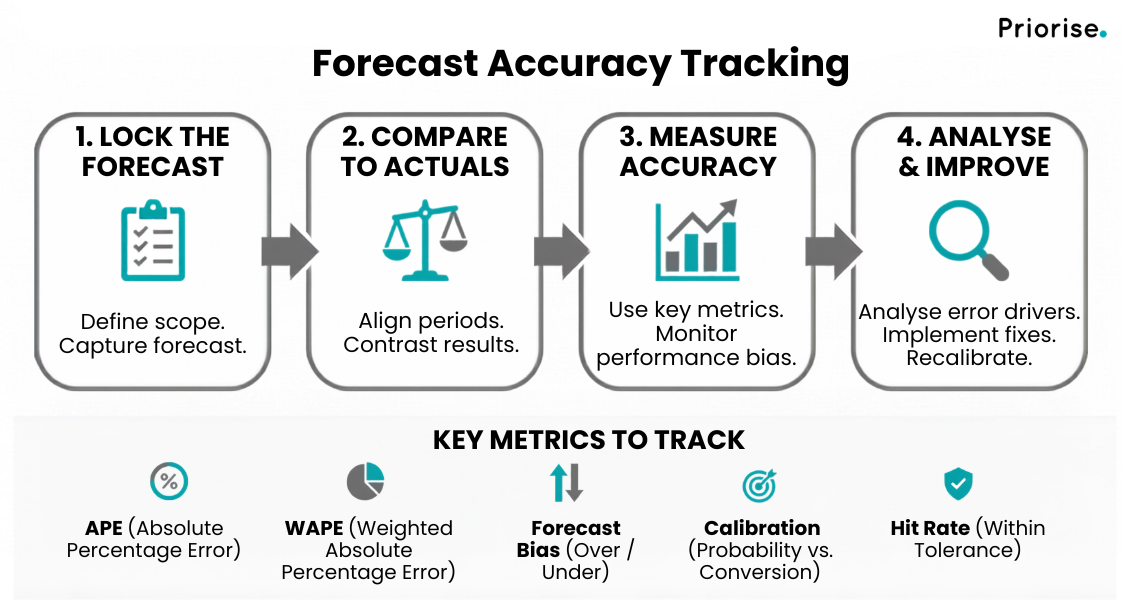
Fig 3: Stop guessing your numbers and use this simple four-step framework for reliable forecast accuracy tracking
Start With Forecast Accuracy Tracking
Measure what you have before replacing it. Otherwise, you will not know whether the method was actually the problem.
Lock the forecast before the period begins, then compare it with the actual result at period end. A simple measure is:
Absolute percentage error = |Forecast − Actual| ÷ Actual × 100
Track the direction of misses separately through sales forecast bias. Two teams can have similar average error while one consistently over-forecasts and the other moves above and below the actual result.
Where Sales Forecasting Accuracy Is Actually Won
Most forecasting projects quickly become data projects. Stage definitions differ across teams. Activity data sits in another system. Closed-lost reasons remain buried in free-text fields.
The model may not be the constraint.
That is where Priorise works with revenue teams: joining CRM, activity, and outcome data so forecasts are built on a more reliable foundation, then rebuilding stage probabilities from the client’s own closed history rather than inherited defaults.
Improving the inputs can often do more for sales forecasting accuracy than replacing the forecasting method.
Choose the method your data can support today
Measure it properly, and upgrade when your deal volume earns the upgrade

FAQs
Check CRM hygiene, historical outcomes, changes in the sales motion, and the reliability of the fields feeding the model before deciding the technology is the problem.
There is no universal threshold. The key question is whether you have enough comparable historical outcomes to identify stable patterns.
Not by itself. A method can inherit systematically skewed inputs. Track forecast bias across several periods and address the process or incentives creating the distortion.
Both can be useful. Measure them separately because accuracy can change as the forecast period gets longer.
Yes. Comparing methods against the same periods can help separate differences in the method from weaknesses in the underlying data.
Sources

Snehal Kakade
Technology Consulting Partner
Snehal Kakade is a Technology Consulting Partner at Priorise, with 15+ years of experience across data science, data engineering and analytics leadership. Her work centres on data platform strategy, scalable data solutions and applied Gen AI. She has built and led analytics teams that translate complex enterprise data into commercial decisions. She writes on modern data platforms, analytics transformation, applied AI and Gen AI, and the practical challenges of taking data and AI solutions from concept to enterprise scale.
Snehal Kakade is a Technology Consulting Partner at Priorise, with 15+ years of experience across data science, data engineering and analytics leadership. Her work centres on data platform strategy, scalable data solutions and applied Gen AI. She has built and led analytics teams that translate complex enterprise data into commercial decisions. She writes on modern data platforms, analytics transformation, applied AI and Gen AI, and the practical challenges of taking data and AI solutions from concept to enterprise scale.