


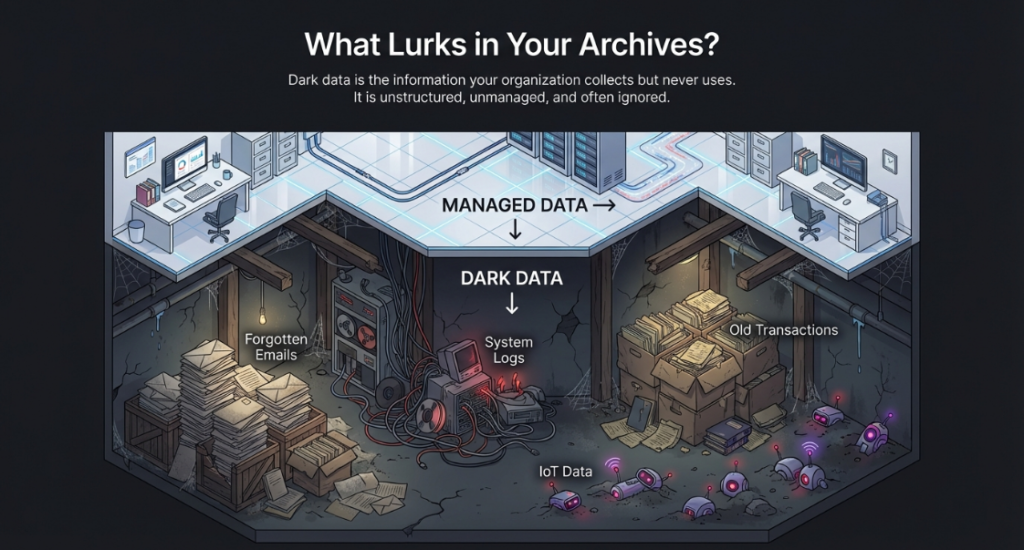
Have you ever stopped thinking about what’s lurking in your organization’s data archives? It might surprise you—dark data; the information your organization collects but never uses, could be exposing you to serious compliance, security, and financial risks. While often overlooked, unmanaged dark data is increasingly a focal point of regulatory scrutiny and cyber threats. Understanding these hidden dangers is critical for any organization seeking to leverage data safely and effectively as part of its data and AI strategy.
Key Compliance Risks Hidden in Dark Data
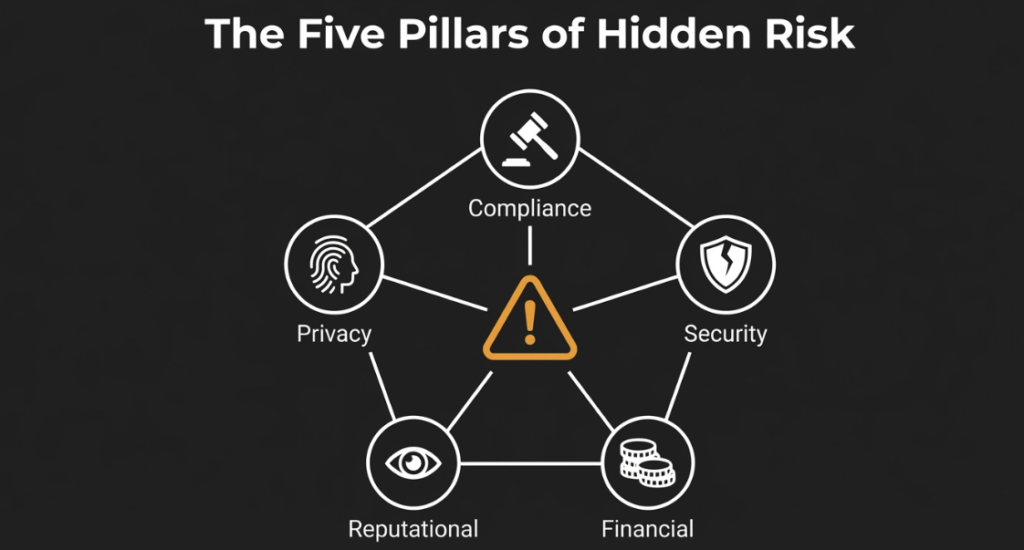
Dark data encompasses emails, system logs, old transaction records, IoT data, and archived documents. Because it is unstructured or hidden, organizations frequently ignore it. But ignoring dark data doesn’t make it harmless. In fact, it can create multiple risk layers:
- Compliance and Regulatory Risk
Regulations such as GDPR, CCPA, and HIPAA apply to all data containing personal or sensitive information—even if it’s in long-forgotten archives. Dark data can harbor customer identifiers or proprietary information. Without effective dark data management, organizations may inadvertently violate these regulations, resulting in fines, legal actions, or reputational damage.
- Security Risk
Unmonitored dark data can become an attractive target for cyberattacks. Hackers exploit unprotected datasets that may not be included in regular security audits. Encrypting and controlling access to dark data is essential to prevent breaches and should be a key element of your data and AI strategy.
- Financial and Operational Risk
Retaining unnecessary or unmanaged dark data increases storage costs and complicates IT infrastructure. Moreover, during audits or legal discovery, the inability to locate or verify dark data can delay operations or trigger penalties. Implementing dark data management ensures that only necessary data is retained and is easily accessible when required.
- Reputational Risk
If sensitive information from dark data is exposed, public trust can be severely damaged. Organizations may face customer backlash or media scrutiny, affecting long-term brand value. Comprehensive dark data audits, a core part of dark data management, can help mitigate these risks.
- Privacy and Personal Data Exposure
Dark data frequently contains personal information that has exceeded its legitimate retention period but remains unsecured. This creates significant privacy violations when breaches occur or during regulatory assessments, potentially resulting in substantial fines and reputational damage.
How to Mitigate Dark Data Compliance Risk
Addressing dark data risks requires a proactive, structured approach integrated into your broader data and AI strategy:
- Comprehensive Data Discovery and Classification
The first step is to locate and classify all dark data. Use automated tools to scan storage systems, archives, and endpoints to identify sensitive or regulated information. Classification enables better monitoring and reduces compliance exposure.
- Data Retention Policies and Minimization
Not all data needs to be retained indefinitely. Establish clear retention schedules and implement data minimization practices to reduce unnecessary storage. This approach limits compliance and operational risk while keeping dark data management efficient.
- Access Controls and Encryption
Restrict access to dark data based on roles and responsibilities. Encrypt sensitive information both at rest and in transit. These measures are vital to prevent unauthorized access and form an integral part of any data and AI strategy.
- Continuous Monitoring and Audits
Regular audits of dark data help identify anomalies or non-compliant records early. By monitoring usage patterns and retention adherence, organizations can demonstrate compliance with readiness to regulators and stakeholders.
- Integration into AI and Analytics Workflows
When dark data is properly classified and secured, it can safely feed analytics and AI models, providing insights without regulatory risk. This alignment ensures that your data and AI strategy leverage all available information without compromising compliance.
The Strategic Advantage of Dark Data Management
Proactively managing dark data reduces hidden risks and transforms it into a strategic asset. Organizations that integrate dark data management into their data and AI strategy gain both regulatory assurance and operational efficiency. They can safely unlock insights from previously unused data, improve decision-making, and maintain a competitive edge.
Summary:
Dark data may seem invisible, but the risks it carries are very real, from compliance penalties to cybersecurity breaches, financial inefficiencies, and reputational damage. Effective dark data management, embedded in a strong data and AI strategy, is the key to mitigating these risks while extracting value from previously untapped data.
At Priorise, we help organizations identify, secure, and manage dark data to reduce hidden risks and maximize compliance. Take control of your dark data today, partner with us to safeguard your operations, and unlock actionable insights.