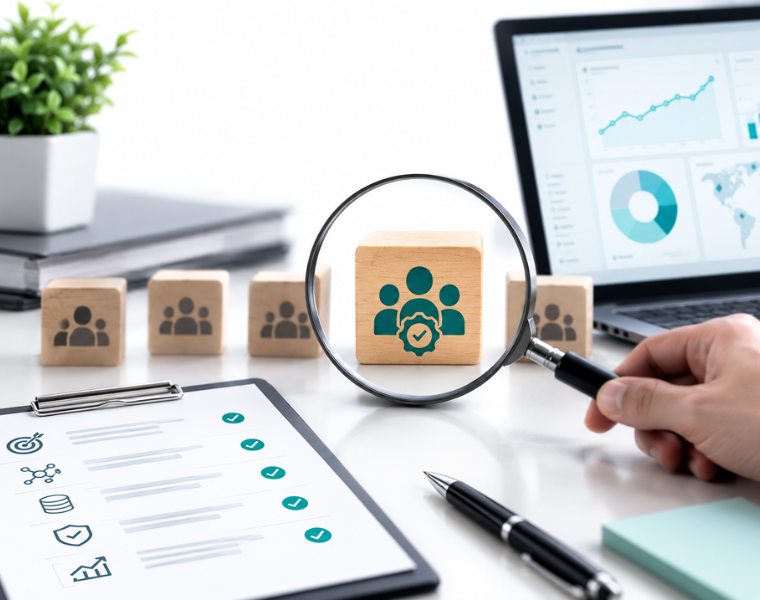
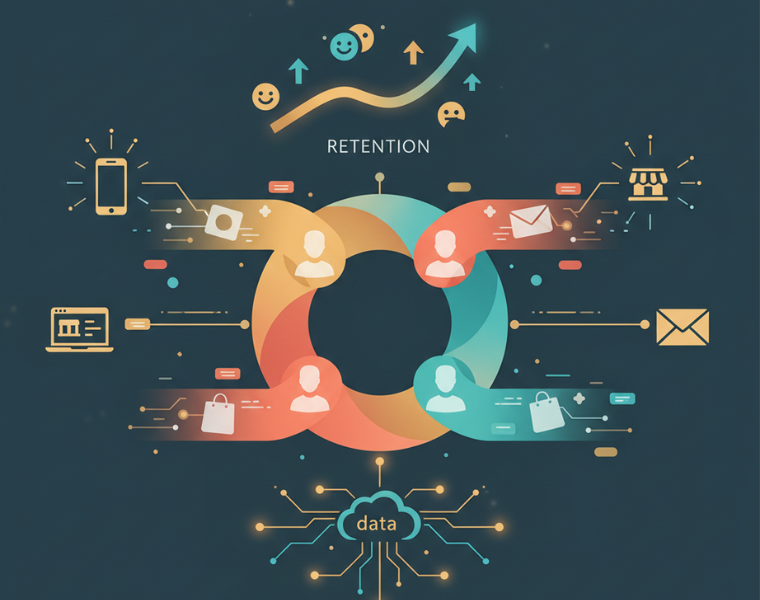
Retail loyalty programs are no longer just about discounts and points. In an era where consumers expect relevance in every interaction, customer loyalty in retail is increasingly determined by how well brands understand and anticipate individual needs. This is where data-powered personalization becomes a strategic differentiator.
Imagine a mid-sized retailer struggling with repeat purchases despite a sizable loyalty base. Customers were enrolled, but engagement was low. Shifting from generic campaigns to data-driven personalization, the brand transformed its retail loyalty programs into dynamic engagement engines, and retention followed. This is the promise of personalization when executed with precision and purpose.
Why Personalization Is Central to Modern Retail Loyalty Programs
Traditional retail loyalty programs often rely on static rules: earn points, redeem rewards, repeat. While functional, these models fail to account for diverse customer behaviors, preferences, and purchase intent. Data-powered personalization addresses this gap by leveraging transactional, behavioral, and contextual data to tailor each interaction.
For customer loyalty in retail, personalization improves relevance. When offers align with what a customer prefers, categories, price sensitivity, or shopping frequency, engagement rises. Retailers using advanced retail loyalty programs no longer ask, “How many points should we offer?” Instead, they ask, “What action will this customer most likely take next, and how do we influence it?”
Data Foundations: Turning Signals into Strategy
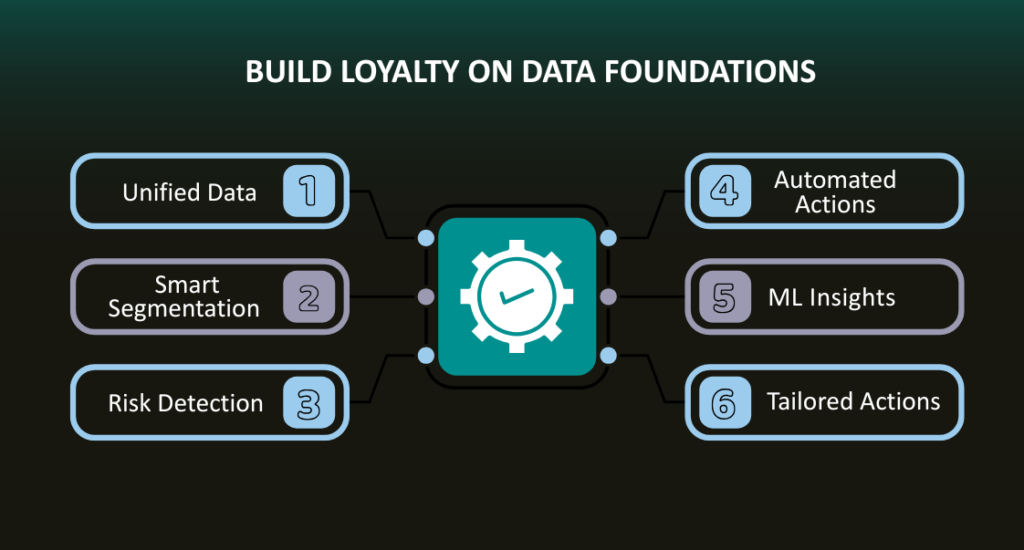
Effective personalization depends on data quality and integration. Retailers must unify data across POS systems, e-commerce platforms, mobile apps, and CRM tools. This unified view enables segmentation that goes beyond demographics to include behavioral and predictive insights.
For example, Priorise enables retailers to identify high value but at-risk customers and trigger targeted incentives before churning occurs. This proactive approach directly strengthens customer loyalty in retail by addressing issues before customers disengage.
In advanced retail loyalty programs, machine learning models analyze purchase cadence, product affinity, and response history. The output is not just a segment, but a recommended action, such as a tailored reward, reminder, or experience.
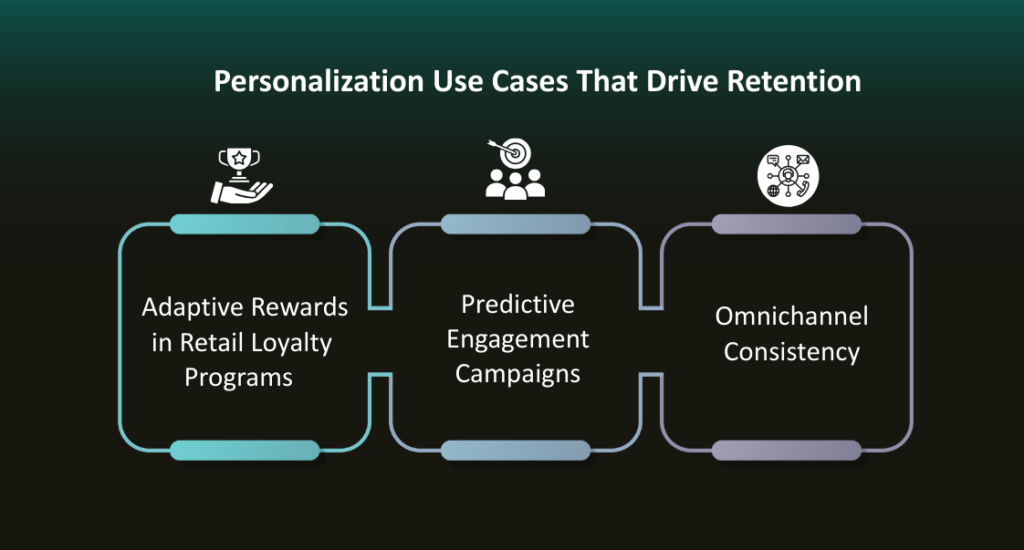
Personalization Use Cases That Drive Retention
1. Adaptive Rewards in Retail Loyalty Programs
Traditional retail loyalty programs often apply the same reward of mechanics to all members. Data-powered personalization enables adaptive rewards, offering higher incentives to at-risk customers while maintaining margin efficiency for high-frequency shoppers. This targeted approach directly strengthens customer loyalty in retail by addressing individual value perceptions.
2. Predictive Engagement Campaigns
By leveraging historical data and behavioral patterns, retailers can predict when a customer is likely to disengage. Proactive outreach, such as personalized offers or reminders, can re-engage customers before churn occurs. These predictive campaigns elevate retail loyalty programs from reactive to preventive.
3. Omnichannel Consistency
Customer loyalty in retail depends on seamless experiences across channels. Personalization ensures that whether a customer interacts online, in-app, or in-store, the messaging and rewards remain consistent. Data orchestration platforms like Priorise help unify these touchpoints into a single loyalty narrative.
The Technology Behind Effective Personalization
The success of modern retail loyalty programs hinges on technology powering them. Priorise’s platform integrates seamlessly with existing retail systems, creating a unified view of each customer across all touchpoints i.e., online, in-store, and mobile.
Machine learning algorithms continuously refine customer profiles, identifying patterns that humans might miss. This allows for real-time personalization that adapts to changing preferences and behaviors. When a customer’s shopping patterns shift, the system recognizes these changes and adjusts communications accordingly.
For instance, a home goods retailer noticed through its analytics that customers who recently purchased baby items began browsing different product categories. By updating their customer profiles and sending relevant home organization tips and product recommendations, they maintained engagement through this life transition, strengthening customer loyalty in retail during a period when many brands lose connection.
The Future of Retail Loyalty Is Personal
As competition intensifies, generic loyalty initiatives will continue to lose effectiveness. Retail loyalty programs must become adaptive, predictive, and deeply customer centric. Data-powered personalization is no longer optional; it is foundational to sustainable customer loyalty in retail.
Ready to transform your retail loyalty programs into retention engines? Discover how Priorise can help you prioritize the actions that matter most for customer loyalty in retail, starting today.